

Custom Scenic Fabrication vs. Standard Scenic Construction
Not every project needs the same approach. A retail pop-up on a two-week timeline has different needs than a museum gallery meant to last a decade. This is why the choice between custom scenic fabrication and standard scenic construction matters so much. One path builds around a stock system. The other builds around your exact concept, from the ground up.
This blog breaks down what separates the two approaches and where each one makes sense.
What Standard Scenic Construction Really Means
Standard scenic construction relies on pre-made components, stock materials, and repeatable building methods. Think of modular panels, off-the-shelf trim, and standard paint finishes assembled into a functional set or display.
This approach typically includes:
- Pre-fabricated panels and framing systems
- Common materials sized to standard dimensions
- Simple paint or laminate finishes
- Faster assembly using familiar building methods
Standard construction has a place. It works well for temporary displays, tight budgets, or projects where the design does not need to be one of a kind. The tradeoff is flexibility. What you see in the catalog is close to what you get.
What Custom Scenic Fabrication Actually Involves
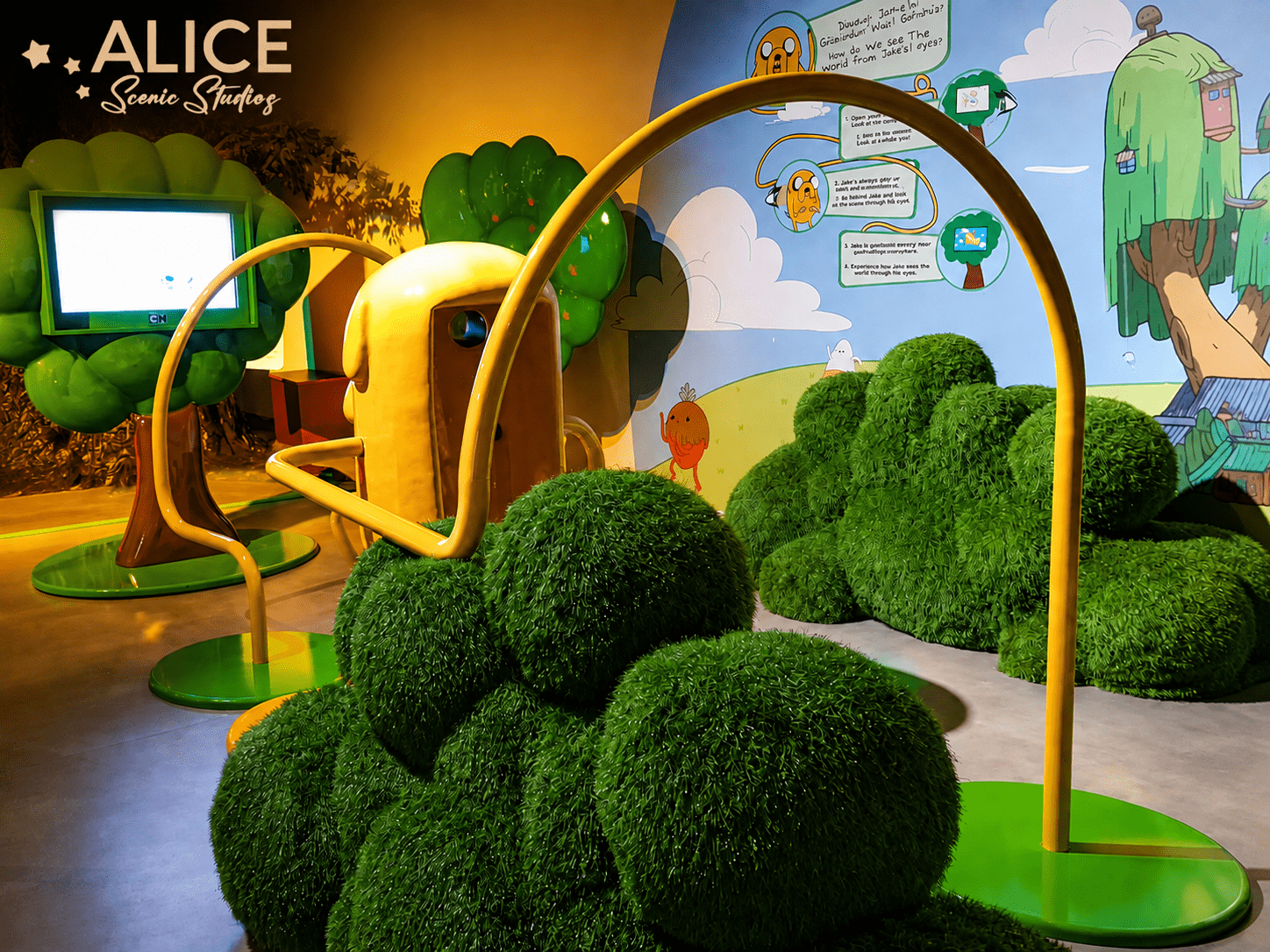
Custom scenic fabrication starts somewhere different. It begins with your concept, not a catalog. Every piece is designed, engineered, and built to match a specific vision, whether that is a themed environment, a museum exhibit, or a broadcast studio set.
This process usually covers:
- Original design work built around your brand or story
- Sculpting, mold-making, and hand-finished detail work
- Structural engineering suited to the exact space and load requirements
- Materials chosen for the specific look, durability, and budget needed
A skilled scenic production company treats each project as its own problem to solve, rather than a variation on a standard template. Nothing about the final piece is generic, because nothing about the process was generic either.
Design Freedom: Where the Real Difference Starts
The biggest gap between the two approaches shows up at the design stage. Standard construction works from a limited set of shapes, sizes, and finishes. If your vision fits inside those limits, the process moves quickly. If it does not, you end up compromising the design to fit the system.
Custom scenic fabrication removes that ceiling. Designers start with a blank page and build toward the exact look a project needs, whether that means a sculpted centerpiece with no standard equivalent, dimensional signage matching an exact brand color, or a layout built around unusual room geometry.
For projects where the visual identity matters as much as the function, this freedom is not a luxury. It is the entire point of the project.
Materials: Off-the-Shelf vs Purpose-Built
Material choice separates the two approaches almost as much as design does. Standard construction leans on common, easy-to-source materials chosen for cost and speed. That keeps prices low but limits texture, finish quality, and how long a piece holds up under heavy use.
A purpose-built approach to custom scenic fabrication selects materials based on the actual demands of the project:
- How much daily handling or foot traffic a piece will face
- Whether the environment requires fire-rated or weatherproof materials
- How well a surface needs to hold fine detail, texture, or paint
This is where a project either ages well or starts looking tired within a season. Standard materials are not wrong. They are simply chosen for a different priority, and that priority is rarely longevity.
Cost and Timeline: What You Trade for What
Standard scenic construction almost always costs less upfront and moves faster, since stock parts and familiar assembly steps mean a project can go from order to installation quickly. This matters for tight deadlines and one-time events.
Custom scenic fabrication costs more and takes longer because original design work, mold-making, and hand-finishing cannot be rushed without hurting quality. A realistic custom timeline typically includes concept development, engineering, fabrication in the shop, and testing before installation. In exchange, custom pieces are engineered for their specific use, which usually means fewer repairs, less need for replacement, and a design that does not need to be redone when trends shift.
For a short-lived event, the lower upfront cost of standard construction often makes sense. For anything meant to last years or represent a brand permanently, the long-term maths tends to favor the custom route.
Durability and Maintenance Over Time
A piece that looks great on day one is not the same as a piece that still looks great after a year of daily use. Standard construction, built from common materials and simpler joinery, tends to show wear faster in high-traffic environments.
Custom-built pieces are engineered with the full lifespan of the project in mind. A reliable scenic production company designs for structural stability under repeated handling, finishes that resist fading or chipping, and materials suited to indoor, outdoor, or high-humidity conditions.
This is especially important for museum exhibits, retail environments, and broadcast sets, where the piece has to perform every single day, not just look good in an opening photo.
When Each Approach Makes Sense
Custom work is not automatically the right answer for every project. Standard scenic construction fits well when the budget is tight, the timeline is short, the design does not need to be one of a kind, or the project is temporary, such as a short event or pop-up.
Custom scenic fabrication is worth the extra time and cost when the design needs to be original and cannot come from a catalog, the piece represents a brand identity that needs to feel distinct, or the environment will see years of daily use rather than weeks. Museum exhibits, themed environments, broadcast studio sets, and flagship retail spaces almost always fall into this category, since each one depends on a look that a standard system simply cannot replicate.
The Bottom Line
Neither approach is universally better. Standard scenic construction offers speed and a lower upfront cost for projects that do not need a one-of-a-kind look. Custom scenic fabrication offers design freedom, durability, and long-term value for projects built to represent a brand or story for years. The right choice depends on the timeline, the budget, and how much the final look needs to stand apart.
Alice Scenic Studios brings both approaches to the table, helping clients choose the path that actually fits their project instead of forcing every build into the same mold. Reach out today to start the conversation.
Frequently Asked Questions
- What is the main difference between custom and standard scenic construction?
Custom work is designed and built from scratch around a specific concept, while standard construction uses pre-made components and repeatable methods. - Is custom scenic fabrication always more expensive?
It usually costs more upfront, but it often proves more cost-effective over time due to stronger materials and fewer repairs. - How long does a custom fabrication project typically take?
Timelines vary by scope, but most custom projects run several weeks to a few months from design approval to installation. - Can standard construction still look high quality?
Yes, when it is well executed and matched to the right project, standard construction can look polished and professional. - How do I know which approach fits my project?
Consider your timeline, budget, and whether the design needs to be completely original. A production partner can help evaluate the right fit.