

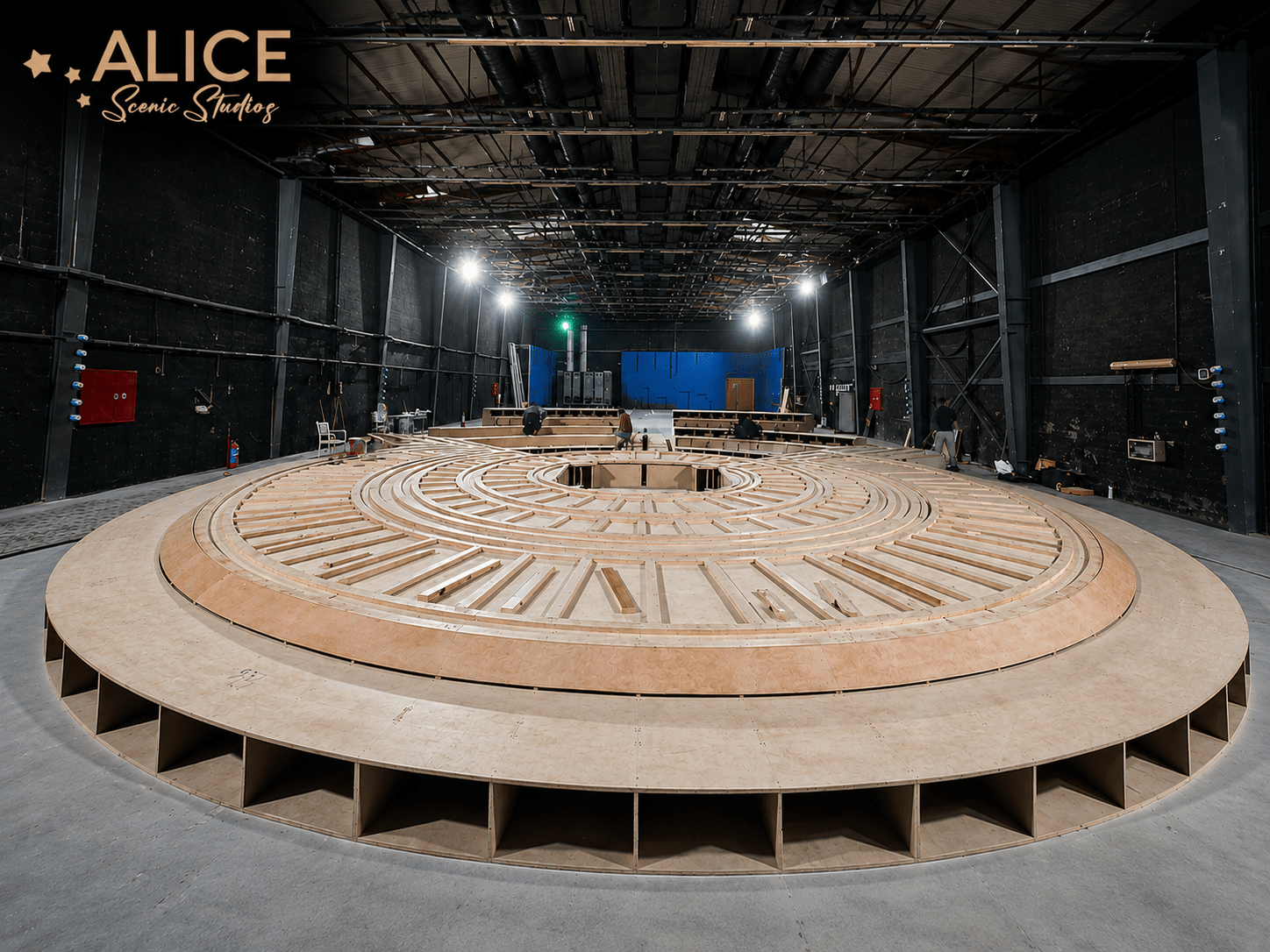
The Process of Designing and Building a Television Studio Set
A studio set is more than a backdrop. It sets the tone before a host says a single word, and it has to survive months or years of daily production without losing its shine. This is exactly what television studio fabrication is built to deliver: a space that looks sharp on camera and holds up on the floor.
This blog walks through how a studio set moves from a first sketch to a finished, camera-ready build, so you know what to expect at each stage of the process.
Where the Process Starts
Every studio build begins with questions, not tools. What is the show about? Who is the host, and how do they move through the space? What story does the set need to tell before the cameras even start rolling?
At this stage, teams typically work through:
- The show format, whether it is news, talk, game show, or live sports coverage
- Brand identity and how it should show up in color, shape, and texture
- Studio dimensions, ceiling height, and floor space available
- Budget limits and a realistic timeline before the first air date
Turning the Concept Into a Buildable Plan
Once producers approve the concept, the project moves into technical planning. Rough sketches become 3D models, elevation drawings, and detailed technical documents that a fabrication shop can build from directly.
This phase usually covers:
- Set layout and how talent, cameras, and crew will move through the space
- Placement of anchor desks, panels, and interactive elements
- Sightline checks from multiple camera positions
- Early planning for LED walls, broadcast lighting, and AV routing
Material Choices That Shape the Final Set
Material selection gets overlooked by people outside the industry, yet it drives almost every outcome that matters on a studio floor. The right material holds its finish under daily handling. The wrong one shows wear within weeks.
Television studio fabrication teams weigh several factors before locking in materials:
- How the surface will read under 4K broadcast lighting
- Daily wear from cameras, crew movement, and quick set changes
- Fire code compliance within a working studio environment
- How well a material holds paint, texture, and fine detail over time
These decisions rarely happen in isolation. Solid television studio fabrication confirms that a design is buildable within budget, not just visually strong on paper. This step protects both the creative vision and the production schedule.
Inside the Fabrication Shop
This is where drawings become physical objects. Carpenters, metalworkers, painters, and finish artists take the approved design and build every piece by hand or through precise machining.
Work happening in the shop typically includes:
- Structural carpentry and millwork for desks, panels, and backdrops
- Metalwork and rigging support for load-bearing elements
- Scenic paint and layered surface finishes that catch studio light correctly
- Graphics, dimensional signage, and backlit branding elements
An experienced team handling television studio fabrication watches this stage closely, since small errors here are far harder to fix once a piece reaches the studio floor. A single joint that sits slightly off can catch the light wrong on camera, and that kind of flaw is hard to hide once the set is live.
You can also read : Broadcast Studio Set Design That Makes Every Frame Count
Why Fast, Hands-On Support Matters
Distance between a production company and its fabrication partner affects more than shipping. It affects how quickly problems get solved when air dates do not move.
A close, responsive fabrication partner offers:
- Faster turnaround on last-minute set adjustments before a shoot
- Fewer shipping risks for large or fragile studio elements
- Easier coordination with lighting, AV, and other on-site contractors
- More chances for in-person reviews before cameras start rolling
Live television does not pause for a shipping delay. When a hinge breaks or a panel warps two days before launch, a team built for broadcast studio set work and quick response makes the difference between staying on schedule and missing an air date.
Testing Before the Cameras Ever Roll
Finished pieces do not move straight from the shop floor to the studio floor. They go through testing first, since problems are far cheaper to fix before installation than after.
Typical checks include:
- Structural stability under repeated handling and set changes
- Reliability of any moving, lighting, or interactive components
- How finishes and colors actually read under studio lighting
- Fit checks against doorway, hallway, and freight elevator dimensions
This step protects the production schedule. A set piece that looks flawless in the shop still has to survive the trip into the studio and hold up through a full shooting season.
Installation Day
The final phase brings everything together inside the studio itself. This stage demands tight coordination between the fabrication team, the technical crew, and the production staff, often within a tight window between shows.
Installation involves:
- Transporting and positioning large or delicate set pieces
- Wiring LED walls, broadcast lighting, and AV systems on site
- Fine-tuning sightlines and lighting to match the actual studio
- A final walkthrough with producers before the first shoot
Strong television studio fabrication planning accounts for these logistics from day one. A set piece that fits the render perfectly still has to move through the studio’s doors and hallways without a scratch.
Custom Builds for Every Format
Not every studio set serves the same purpose. A permanent news anchor desk needs durability and a timeless look that will not date quickly. A live sports or eSports set needs bold visual presence, fast assembly, and enough flexibility to support complex lighting and LED systems that change from event to event.
Modular set systems have become especially valuable here. A well-built modular broadcast studio set lets a production reconfigure the same space for multiple show formats, which saves both time and money across a season.
Common Slowdowns Worth Planning Around
Even well-managed builds hit friction points. Knowing where these usually happen helps production teams plan ahead instead of reacting under pressure.
Frequent slowdowns include:
- Script or format changes requested after fabrication has already started
- Underestimating how long custom metalwork or millwork actually takes
- Too many vendors on one project without a single point of contact
- Studio conditions that differ from the original architectural drawings
Productions that build in extra time for these possibilities tend to stay closer to their original budget and launch date.
The Bottom Line
Dependable television studio fabrication gives a show a set that holds up on camera and on the floor, day after day.
Alice Scenic Studios brings design, fabrication, and installation expertise together to build studio sets for news, sports, eSports, and live event productions. Reach out today to start your next build.
Frequently Asked Questions
- What is television studio fabrication?
It is the process of designing and building the physical elements of a TV studio set, including structure, surfaces, graphics, and lighting integration. - How long does a typical studio set build take?
Most builds run several weeks to a few months, depending on scope, complexity, and how much custom fabrication the set requires. - Why does material choice matter so much for TV sets?
Studio sets face constant handling and bright lighting. The wrong material shows wear fast, while the right one holds its finish and structure for years. - What is the benefit of a modular set system?
A modular system lets a studio reconfigure the same space for multiple show formats, which saves time and reduces costs across a production season. - Does working with a responsive fabrication partner actually make a difference?
Yes. A responsive team can handle last-minute adjustments and on-site troubleshooting quickly, which keeps productions on schedule ahead of air dates.