

How Custom-Themed Environment Fabrication Builds Immersive Worlds Around a Story
Ever walked into a theme park land, a themed restaurant, or a flagship store and felt like you stepped into a completely different world? That feeling doesn’t happen by accident. It’s the result of custom-themed environment fabrication, where structures, textures, props, and finishes all work together to tell one clear story. Every surface is doing a job, and when it’s done right, visitors stop noticing the individual pieces and simply feel like they’re somewhere else.
Let’s look at how this actually comes together, piece by piece.
It All Starts With the Story, Not the Structure
Before any material gets cut or any mold gets built, the story has to be locked in. Design teams work closely with creative directors, architects, and brand leads to understand what world they’re building and what visitors should feel when they walk through it.
Concept Illustrations and 3D Master Plans
Once a creative concept is approved, custom-themed environment fabrication begins with turning that concept into 3D master plans and technical production drawings, the documents that tell the shop and installation crew exactly how the environment gets built. This step matters because it catches structural and buildability issues early, when a fix is a redrawn drawing instead of a rebuilt structure.
Translating the Visitor Journey Into a Build Plan
A big part of custom-themed environment fabrication is taking the visitor journey defined by the creative team, entry points, transition areas, and key story beats, and converting it into shop drawings and a fabrication sequence. This is what makes sure the physical build supports the experience the way it was designed, from the first piece installed to the last.
Specifying Materials That Meet the Vision
Once the creative direction sets the look and feel, Alice Scenic Studios specifies materials that can actually deliver it in the real world: durability, fire and safety code, weather exposure, and budget all factor in. A rock formation in a rainforest exhibit needs a different material than a decorative panel in a retail store, even if they’re both meant to look natural. Getting this right at the specification stage avoids costly changes once fabrication is underway.
Building the World: Where the Story Becomes Physical
This is the stage where sketches and plans turn into something people can touch and walk through. Scenic fabrication at this level pulls together several different trades working from one shared vision, rather than separate teams handling pieces in isolation.
-
Scenic Carpentry and Architectural Structures
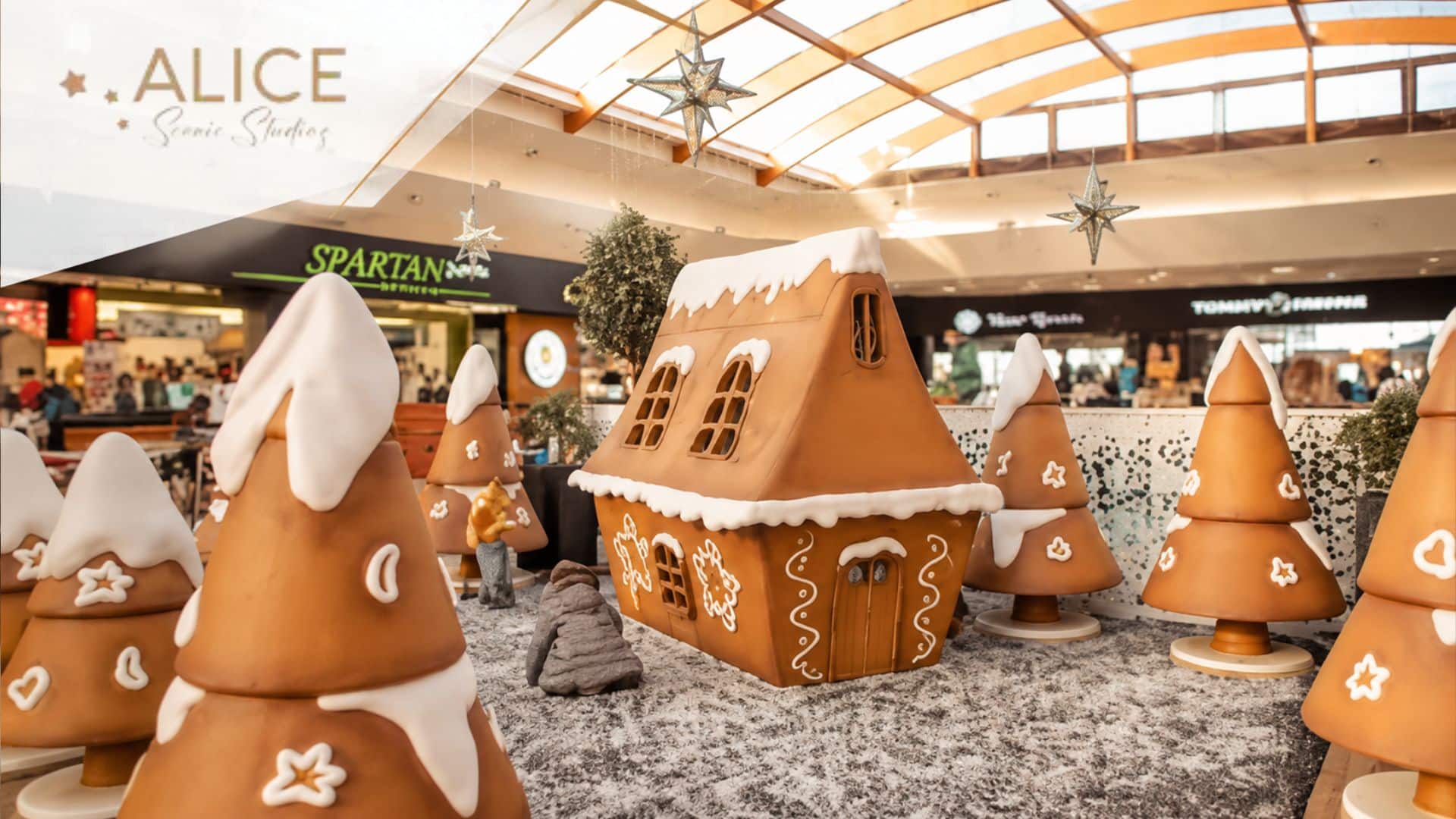
Themed portals, facades, and interior architecture are built to precise measurements and finished to match the story. A castle entrance, a spaceship corridor, or a rustic village facade all rely on scenic carpentry to get the proportions and details right.
-
Sculpted Features and Character Elements
Rock formations, trees, character sculptures, and large decorative pieces are often built using fiberglass-reinforced plastic, since it holds detail well and stands up to heavy daily use. These sculpted features are usually what visitors remember most, since they’re often the most photographed parts of any themed space.
-
Scenic Paint and Aged Finishes
Paint is where a themed environment either comes alive or falls flat. Layered, hand-applied finishes give surfaces texture, age, and warmth, turning a smooth new wall into something that looks like it’s been standing for a hundred years. This kind of detail is what makes a set feel real instead of built.
-
Lighting, Sound, and Interactive Systems
Modern-themed environments aren’t just visual anymore. Lighting design, projection surfaces, sound infrastructure, and interactive features are built directly into the structure from the start, not added on as an afterthought. This is a big part of what makes themed environment fabrication feel so different from basic set dressing.
How Themed Environments Work Across Different Industries
Not every themed space serves the same purpose, but the fabrication process behind them shares a lot of common ground.
-
Theme Parks and Attractions
Theme park environments take a beating. Thousands of visitors pass through ride queues, character zones, and attraction areas every single day. These spaces need structures and finishes that can survive constant touching, leaning, and foot traffic without losing their story or their looks.
-
Retail, Hospitality, and Brand Spaces
Flagship stores, themed restaurants, hotel lobbies, and pop-up experiences all use immersive fabrication to give customers a reason to slow down and remember the visit. A themed space that feels considered and tactile turns a quick shopping trip into something people talk about afterward.
Bringing Every Piece Together on Site
None of this matters if the final installation doesn’t come together smoothly. Large environments are built and finished in stages, then coordinated with construction and operations teams to install everything correctly and on schedule. A project isn’t finished until every surface is complete, every system is tested, and the space is genuinely ready to open its doors.
Why Coordination Matters More Than People Think
When carpentry, sculpting, painting, and AV systems are all handled under one process instead of being split across separate vendors, the final result feels unified. Nothing looks bolted on or out of place because every element was built with the same story in mind from day one.
Why This Approach Actually Works
The real magic of custom-themed environment fabrication isn’t any single element. It’s how the carpentry, sculpture, paint, lighting, and sound all support the same idea at the same time. Take away one piece, like the aged paint finish or the ambient lighting, and the whole space starts to feel like a plain room again. Put them all together, and visitors stop analyzing the space and just feel present in it.
Final Thoughts
Building a believable world takes more than a good idea. It takes a coordinated process where story, structure, texture, and finish are all planned together from the very first sketch.
If you’re planning a theme park land, a branded retail environment, or an attraction that needs to feel like a genuine world rather than a decorated room, Alice Scenic Studios can guide the process from technical development and production planning through custom fabrication, scenic finishing, and installation support. Reach out to start planning your next immersive environment.
Frequently Asked Questions
- How does custom-themed environment fabrication create immersive experiences?
It combines structure, texture, lighting, sound, and props so every part of a space supports the same story. When all these elements are built and finished together, visitors experience a cohesive world instead of noticing individual pieces. - What does a themed environment fabricator build?
A themed environment fabricator builds architectural facades, sculpted features, scenic paint finishes, lighting and AV systems, and interactive elements. These pieces are designed and installed together to create one unified, story-driven space. - How are stories translated into physical themed environments?
The process starts with concept illustrations and 3D master plans that map out the full visitor journey. From there, materials, structures, and finishes are chosen specifically to support that story before any fabrication begins. - What industries use themed environment fabrication the most?
Theme parks, museums, retail stores, hotels, and themed restaurants rely on this type of fabrication most often. Each industry uses it to create memorable, story-driven spaces that keep visitors engaged longer. - How long does a custom-themed environment project typically take?
Timelines depend heavily on the size and complexity of the space. A project usually moves through concept design, fabrication, and on-site installation, with larger attraction-scale environments taking considerably longer than smaller retail or hospitality builds.