

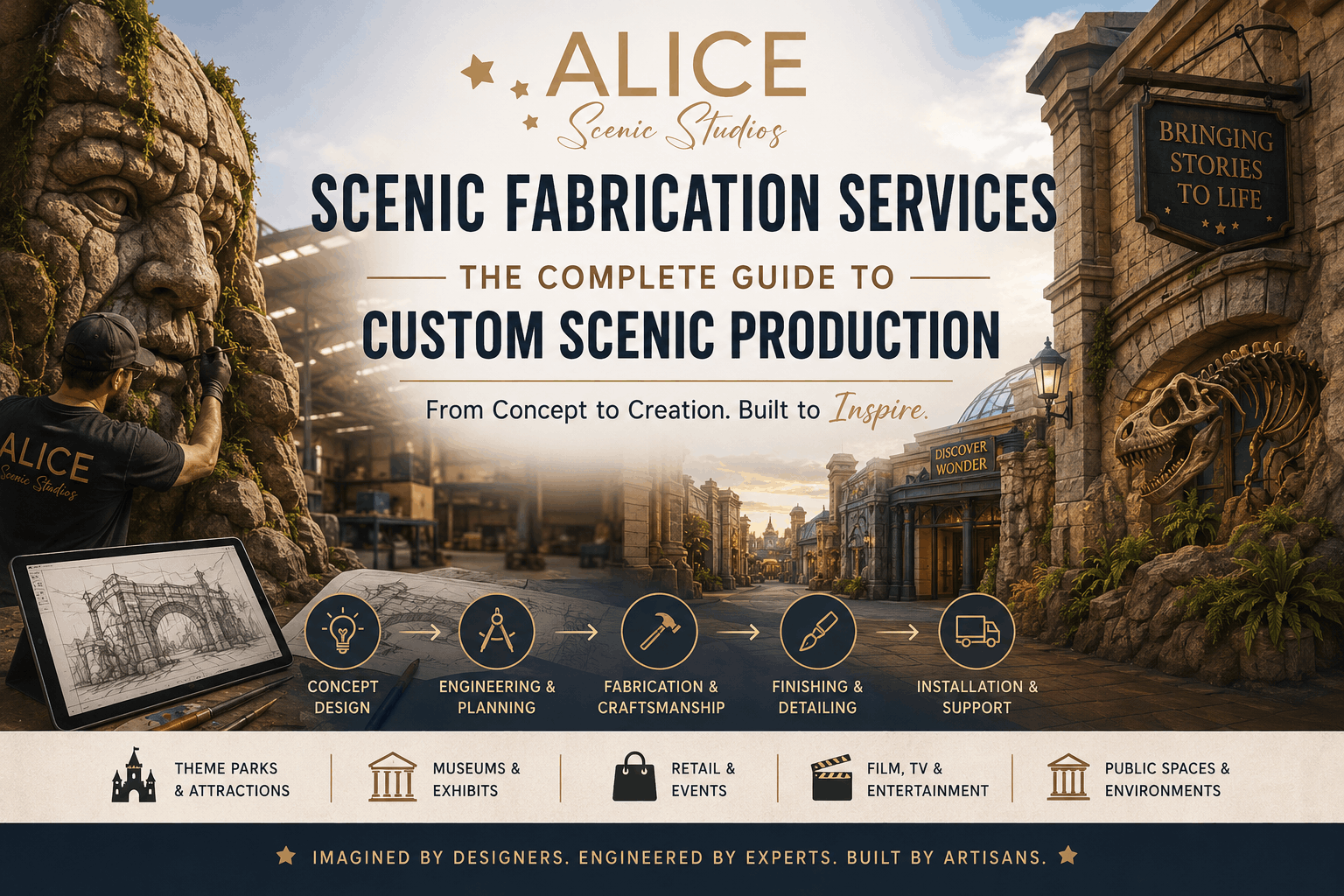
Scenic Fabrication Services: The Complete Guide to Custom Scenic Production
Walk into a theme park, a museum exhibit hall, a TV studio set, or a brand activation at a trade show, and what you’re looking at is the result of scenic fabrication — the design and construction discipline that turns a creative concept into a physical, walkable, touchable environment. It’s an industry that blends artistry with engineering, and getting it right is the difference between a space that feels real and one that feels like a backdrop.
If you’re planning a themed environment, a museum installation, a seasonal display, or a one-off event build, understanding how scenic fabrication actually works will help you brief your team better, budget more accurately, and avoid the common pitfalls that turn an exciting project into a stressful one. This guide walks through what scenic fabrication involves, how the process unfolds from sketch to finished build, the materials that make these projects durable and beautiful, and what to look for in a scenic production partner.
What Is Scenic Fabrication?
Scenic fabrication is the process of designing and physically building custom set pieces, themed environments, props, and architectural elements for use in entertainment, retail, hospitality, and public spaces. It sits at the intersection of design and manufacturing: a team of architects, sculptors, engineers, and painters works from a concept or storyboard and produces something that has to look right, hold up structurally, and survive real-world use — whether that’s thousands of guests touching it at a theme park or studio lights baking it for twelve-hour shoots.
What separates scenic fabrication from ordinary construction is the level of customization involved. Almost nothing is off-the-shelf. A rock formation, a faux storefront, a museum diorama, or a holiday display all start as one-of-a-kind designs that have to be engineered from scratch, then built using techniques borrowed from theater, film, themed entertainment, and industrial manufacturing all at once. Reliable scenic production services bring together master planning, concept design, and hands-on craftsmanship under one roof, so a single team carries the project from first sketch to final install rather than handing it off between disconnected vendors.
The Scenic Fabrication Process: From Concept to Construction
Every successful custom scenic fabrication project follows a similar arc, even though the final product might be a museum exhibit one month and a theme park attraction the next. Understanding these stages helps you know what to expect and where your input matters most.
Design and Planning
This is where the vision takes shape. Designers translate a client’s goals, brand identity, and budget into concept art, 3D renderings, and material boards. For larger projects, this stage also covers master planning and site logistics — figuring out how a themed environment fabrication project will actually fit, function, and flow within its physical space, whether that’s a 40,000-square-foot exhibit hall or a single retail storefront.
Engineering and Material Selection
Once a design is approved, engineers get involved to make sure it’s actually buildable. This includes structural calculations for anything load-bearing, fire-code and safety compliance, and decisions about which materials and fabrication techniques will deliver the right look at the right cost. This is also where custom set construction gets its technical backbone — CAD drawings, shop fabrication plans, and detailed specs that the build team will follow.
Build and Quality Control
This is where the physical work happens: woodworking, metal fabrication, fiberglass molding, sculpting, painting, and finishing, often running in parallel across different shop departments. For large-scale scenic installations, pieces are typically built in modular sections in the shop, tested for fit, then disassembled, shipped, and reassembled on-site. Quality control checkpoints throughout the build catch issues early, long before a piece ever leaves the production facility.
Materials and Finishes That Define Quality Scenic Work
The right choice of fabrication materials and finishes can make or break a scenic piece, both visually and financially. Fiberglass reinforced plastic (FRP) is a workhorse in this industry: lightweight, weather-resistant, and capable of capturing fine sculptural detail, which makes it ideal for rockwork, themed props, and large-format figures. Rigid foam carving is often used for the rough form before a final FRP or plaster coat is applied, keeping weight down on large structures.
Modern shops also lean on 5-axis CNC machining and 3D printing to achieve precision that hand-sculpting alone can’t match, especially for repeated elements or intricate architectural details. On the finishing side, specialty paint techniques — faux wood graining, stone texturing, patina effects, and weathering — are what ultimately sell the illusion. A well-built form with a rushed paint job will always look fake; a modest form with expert finishing often reads as completely real.
Where Scenic Fabrication Comes to Life: Key Industries
Scenic design and fabrication show up in more industries than most people realize. Theme parks, water parks, and indoor playgrounds rely on it for themed environment fabrication that has to survive heavy foot traffic, weather, and constant use. Museums use it for everything from historical dioramas to fully immersive attraction fabrication that lets visitors physically step into a recreated environment rather than just reading a placard.
TV and film studios depend on scenic fabrication for sets that need to look perfect on camera while being built fast and torn down just as quickly. Retail brands use it for in-store environments and pop-up experiences that reinforce brand identity. Even cities and public institutions commission scenic fabrication work for civic art, wayfinding features, and seasonal displays. The common thread across all of these is the need for a partner who can move fluidly between storytelling, engineering, and production logistics.
Custom Scenic Fabrication for Events and Brand Activations
Events bring their own set of demands. Custom scenic fabrication for events — think trade show booths, brand activations, product launches, and experiential marketing installations — typically runs on tighter timelines and has to be built for transport, quick assembly, and just as quick teardown. Unlike a permanent theme park installation, an event piece might only be on display for a few days, but it still needs to look flawless under booth lighting and hold up through setup, breakdown, and reuse across multiple events.
This is where modular construction earns its keep. Pieces designed in interlocking sections can be shipped in cases, assembled on-site without specialized tools, and stored for the next activation, which makes a one-time creative investment pay off across an entire event season rather than a single weekend.
Building Responsibly: Sustainable Scenic Fabrication
Sustainable scenic fabrication has moved from a nice-to-have to an expectation, especially for brands and institutions that have their own environmental commitments to uphold. In practice, this means specifying recyclable or reclaimed materials where the design allows, designing structures to be disassembled and reused rather than scrapped after one project, and choosing low-VOC paints and finishes that are safer for both installers and visitors.
It also means thinking about a piece’s full lifecycle at the design stage, not as an afterthought. A themed environment that’s built to be repainted, reconfigured, or repurposed for a future exhibit delivers far more long-term value than one designed to be torn down and landfilled after a single season. The most experienced fabrication partners build this thinking into their process from the very first design conversation.
Choosing the Right Scenic Production Partner
Not every fabrication shop is equipped to handle every type of project, so it’s worth asking a few pointed questions before committing. Can they manage design, engineering, and build in-house, or will your project be split across multiple vendors? Do they have direct experience with your specific application — museum exhibits, theme park attractions, TV sets, or event activations — since the engineering demands differ quite a bit between them? And can they scale production without sacrificing craftsmanship or blowing the budget?
Alice Scenic Studios was built around exactly this kind of one-stop model: U.S.-based design and project management paired with high-volume, highly skilled production capabilities, so design intent doesn’t get lost in translation between the studio and the shop floor. Whatever the application — a theme park attraction, a museum exhibit, a TV set, or experiential environment construction for a brand activation — having one accountable team handle design, engineering, and fabrication keeps the project coherent and the budget predictable from concept to final install.
Ready to bring your vision to life?
Whether you need a dedicated production partner for a single attraction or a full turnkey scenic build, Alice Scenic Studios combines U.S.-based design leadership with high-quality, cost-effective production to deliver projects that are as durable as they are immersive.
Partner with Alice Scenic Studios today
Frequently Asked Questions
1. What industries use scenic fabrication?
Scenic fabrication is used across theme parks, water parks, museums, TV and film studios, retail and hospitality, expo and trade show booths, and public/civic installations — essentially anywhere a custom-built physical environment needs to support a story, brand, or guest experience.
2. How long does a custom scenic fabrication project take?
Timelines vary widely depending on scale and complexity. A small event piece might be designed and built in a few weeks, while a large-scale scenic installation for a theme park or museum can take several months from initial concept through final on-site assembly. Material selection, structural engineering needs, and shipping logistics all factor into the schedule.
3. What materials are typically used in scenic fabrication?
Common materials include fiberglass reinforced plastic (FRP), carved foam, wood, steel and aluminum framing, and specialty paints and texturing compounds. The right combination depends on whether the piece needs to be lightweight and portable, structurally load-bearing, or built to withstand years of outdoor exposure.
4. Can scenic fabrication be done sustainably without raising costs significantly?
Yes, in most cases. Sustainable scenic fabrication often relies on smarter design choices — modular construction, reusable structural frameworks, and recyclable materials — rather than expensive specialty products. Designing for reuse from the start frequently reduces long-term costs even if there’s a modest upfront investment in better materials or construction methods.
5. Is scenic fabrication only for large, permanent installations?
Not at all. Scenic fabrication covers everything from massive, permanent theme park attractions to small, temporary event booths designed for a single weekend. Custom scenic fabrication for events is just as much a part of the industry as large-scale, permanent themed environments — the design and engineering principles simply scale up or down to match the project.