

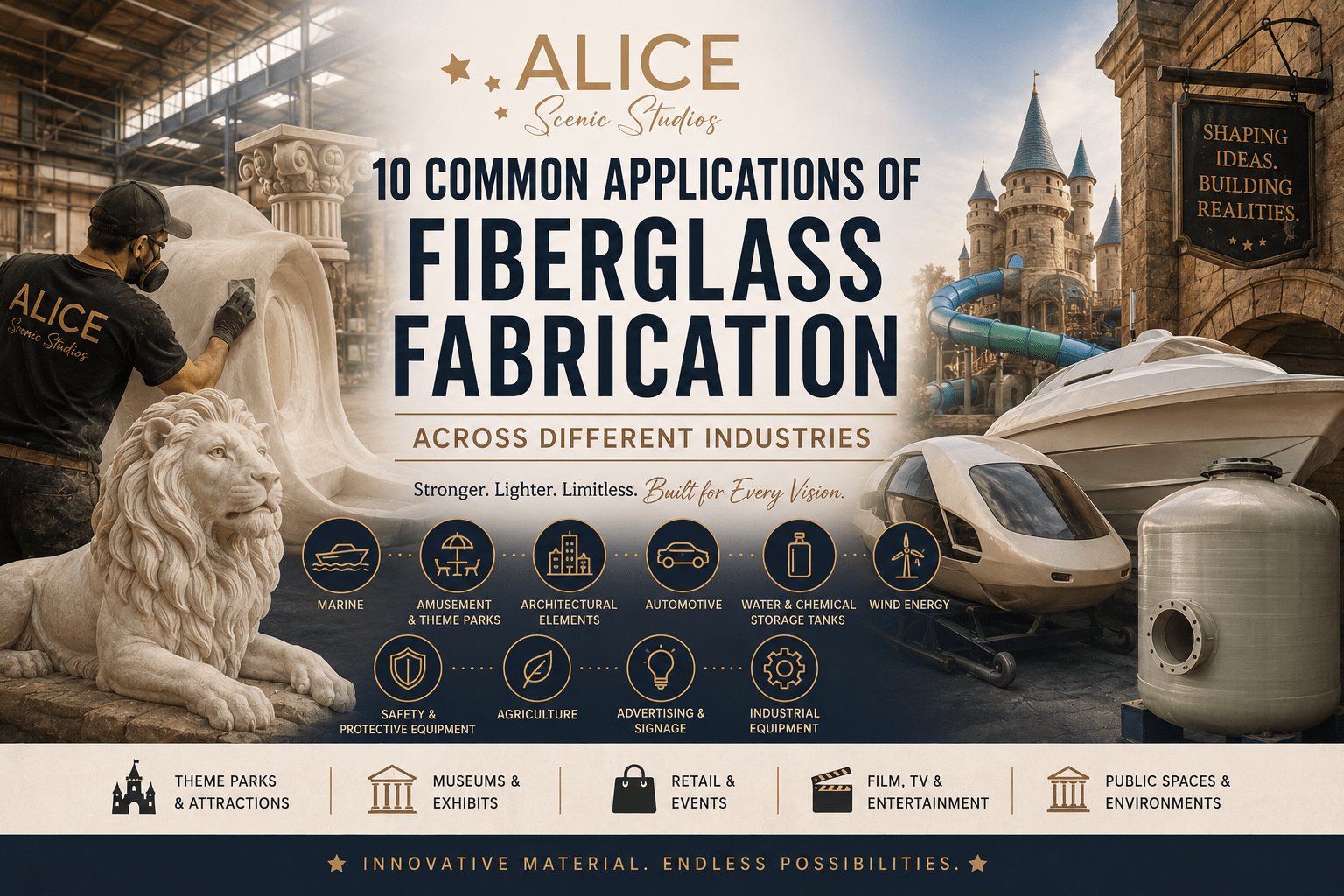
10 Common Applications of Fiberglass Fabrication Across Different Industries
Walk through almost any theme park, museum, or broadcast studio today, and you will find sets, props, and structures built from fiberglass. Fiberglass fabrication turns raw glass fibers and resin into finished parts that hold up in demanding environments and finished pieces that hold fine sculptural detail.
This guide covers 10 common applications of fiberglass fabrication, with a close look at why themed entertainment, museums, and experiential design rely so heavily on a skilled fiberglass fabricator to bring their concepts to life.
What Is Fiberglass Fabrication?
Fiberglass fabrication is the process of combining glass fiber reinforcement with a resin system to create a finished composite part. The fibers give the part its strength. The resin binds the fibers together and holds the final shape.
A fiberglass fabrication company typically works with several methods depending on the project:
- Hand layup, where fabric is placed by hand and saturated with resin — the standard for one-of-a-kind sculptural work
- Vacuum infusion, which pulls resin through dry fibers for a clean, consistent finish
- Spray-up, used for faster production of simpler shapes
- Mold casting, used to reproduce identical parts at scale, ideal for repeatable exhibit components or themed elements
1. Themed Entertainment and Scenic Fabrication
This is where fiberglass fabrication does its most creative work. Theme parks, family entertainment centers, and attractions use fiberglass for rockwork, themed facades, ride vehicles, and large-format character figures. Fiberglass sculptures can capture fine sculptural detail (texture, carving, and paint finishes) while staying lightweight enough for transport and installation.
Scenic fabrication almost never pulls from a catalog. Each rock formation, storefront, tree, or themed archway is a custom design built from scratch to match a designer’s concept art. A custom fiberglass manufacturer with strong sculpting and mold-making capability can turn a 2D rendering into a walk-through environment that feels real to guests, all while meeting the durability and fire-code requirements attractions demand.
2. Museum and Science Center Exhibits
Museums and science centers depend on fiberglass to build durable, touchable exhibit elements: life-size dioramas, replica specimens, interactive models, and architectural build-outs. Museum exhibit fabrication calls for pieces that can withstand thousands of hands-on visitors a year while still looking museum-quality.
3. Broadcast and Film/TV Studio Sets
Broadcast studios and production companies use fiberglass to build set pieces, backdrops, and recurring show elements that need to look permanent on camera but are actually lightweight and easy to strike, store, and reset. Fiberglass holds paint and texture well under studio lighting, which is critical for anything shot on camera.
Because episodic and live productions often reuse the same set pieces, fiberglass fabrication offers the durability needed for repeated builds without the weight and cost of traditional construction materials.
4. Cruise Ship Entertainment and Themed Interiors
Cruise lines increasingly invest in themed dining venues, entertainment lounges, and immersive corridors to differentiate the guest experience. Fiberglass is a natural fit for cruise interiors because it is lightweight (a real advantage for shipboard weight budgets), resistant to humidity and salt air, and can be finished to look like stone, wood, or metal without the weight penalty.
5. Immersive and Experiential Attractions
Escape rooms, branded pop-up activations, experiential marketing installations, and location-based entertainment all lean on fiberglass to build environments quickly and durably. These projects often run on tight production timelines, and fiberglass molds allow a fiberglass fabrication company to reproduce identical themed elements across multiple rooms or touring installations.
6. Marine and Boat Building
Marine construction is one of the oldest and largest users of fiberglass. Boat hulls, decks, and interior panels are almost always built from fiberglass composites.
Fiberglass resists saltwater corrosion far better than steel or aluminum. It also allows builders to mold complex hull shapes that would be difficult to achieve with metal. When damage does occur, repairs are simple compared to welding or replacing metal sections.
7. Automotive Manufacturing
Automakers use fiberglass for body panels, hoods, and structural components, especially in commercial vehicles and specialty builds. It offers a lightweight alternative to stamped steel, which helps improve fuel efficiency without sacrificing strength.
Tooling costs also favor fiberglass in low-to-medium production runs, making it a practical choice for niche vehicle programs where steel stamping tools would be too expensive.
8. Aerospace Components
Aircraft manufacturers rely on fiberglass for radomes, fairings, and interior panels. Electrical transparency and low weight are critical in these applications, since some parts sit near radar and communication equipment. Every part must meet exact tolerances, since even small defects can affect performance or safety.
9. Consumer Products
Fiberglass fabrication also reaches everyday consumer goods. Sporting equipment, electronic enclosures, and medical devices often rely on fiberglass for its balance of strength and light weight.
Manufacturers choose fiberglass here because it holds detailed shapes well and performs reliably under repeated use, making it a good fit for products that need to survive daily wear and tear.
10. Tooling and Mold Making
Before any composite part gets built — whether it’s a themed rock formation or a museum diorama — someone has to build the mold. Fiberglass is the most common material used for this purpose. A skilled custom fiberglass manufacturer produces molds that are durable, repairable, and far more affordable than machined aluminum or steel tooling.
Why Themed Entertainment and Museums Choose Fiberglass
A few core properties explain why fiberglass has become the standard material for scenic and exhibit work:
- High strength-to-weight ratio compared to traditional building materials
- Excellent resistance to weather, humidity, and repeated handling
- Ability to mold complex shapes and fine sculptural detail
- Long service life with manageable, cost-effective repair options
- Compatibility with any paint, texture, or faux finish a designer can imagine
These qualities make FRP fabrication a practical choice whether the goal is a themed rockscape, a museum diorama, a cruise ship lounge, or a touring exhibit that needs to travel and be reassembled again and again.
Final Thoughts
Choosing the right fiberglass fabrication company matters just as much as choosing the right material. A team with strong sculpting talent, mold-making expertise, and hands-on production experience can turn a rough concept sketch into a finished piece that performs exactly as designers imagined.
Frequently Asked Questions
- What industries use fiberglass fabrication the most?
Themed entertainment, museums and science centers, broadcast and film production, cruise lines, and experiential attractions are among the biggest users of custom fiberglass work, alongside marine, automotive, and aerospace manufacturing. Each industry values fiberglass for a slightly different reason, whether that is sculptural detail, durability, or weight savings.
- Is fiberglass fabrication expensive compared to other materials?
Fiberglass generally costs less than carbon fiber while offering far better durability and finish flexibility than materials like foam or wood for themed and exhibit work. It sits in a practical middle ground for many applications.
- How long do fiberglass parts typically last?
Fiberglass parts can last decades when properly designed and maintained. Themed attractions and exhibit pieces built years ago remain in service today, especially when built with quality resin systems and refinished periodically.
- Can fiberglass parts be repaired instead of replaced?
Yes. Damaged sections can be ground back, rebuilt with new laminate, and refinished. This makes fiberglass more practical to maintain than materials that require welding or specialized tooling — a major advantage for touring exhibits and attractions that see heavy guest contact.
- What makes custom fiberglass fabrication different from standard production?
Custom work involves building parts, props, or molds from scratch based on a unique design, rather than pulling from an existing catalog. This approach is the norm in scenic fabrication, museum exhibit fabrication, and themed entertainment work, where no standard product ever fits the designer’s vision.