

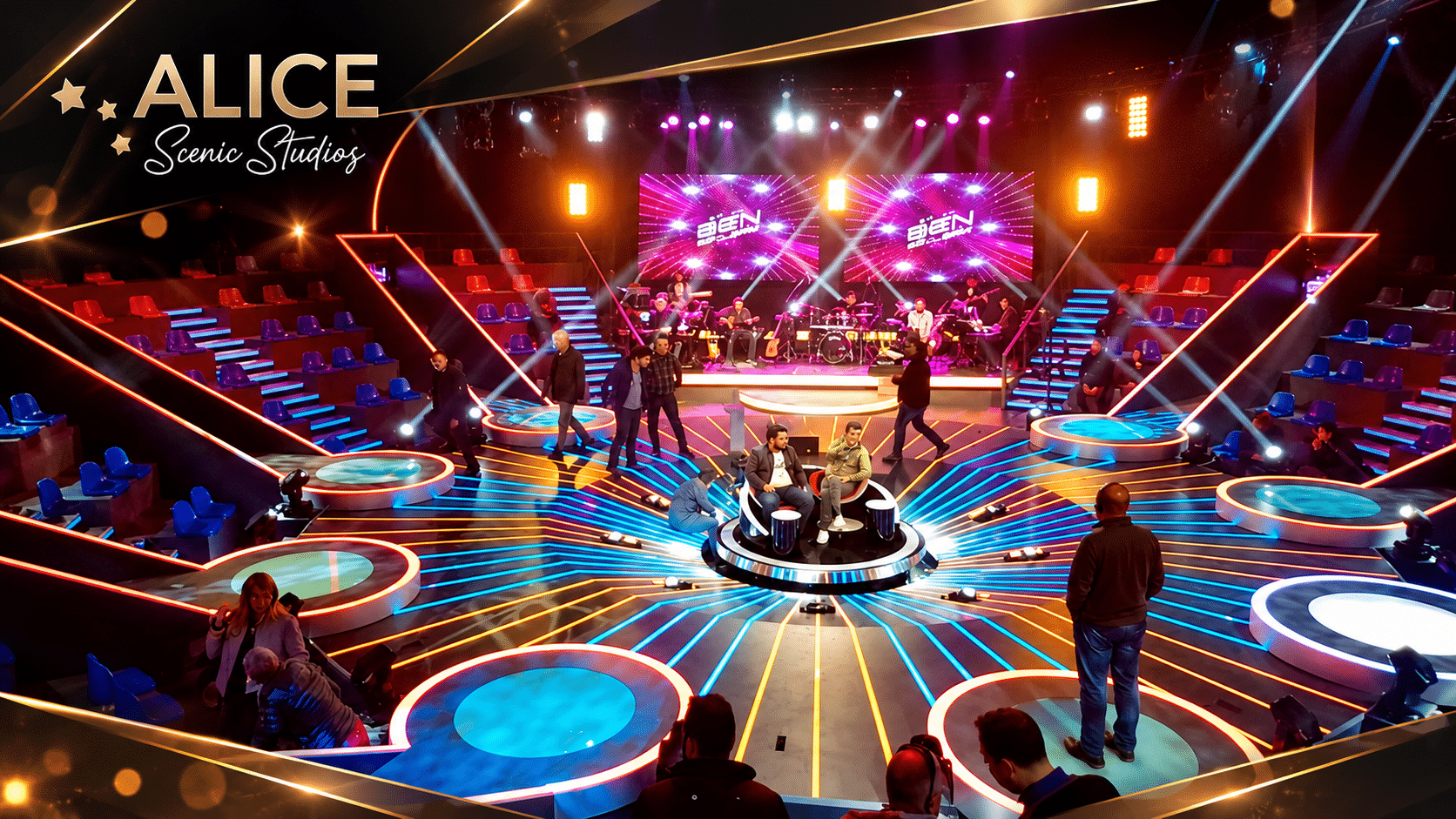
The Role of Fabrication in Creating Flexible Multi-Purpose Television Studios
A morning news show, a talk show, and a live sports show may all need the same studio. That is why television studio fabrication matters so much, because the way a set is built decides how easily it can change. A flexible studio can save time between shows and give producers room to try new formats. It also helps teams keep a strong on-screen look from one production to the next.
Here is how smart fabrication makes that possible.
One Studio, Many Shows
A set should tell your audience who you are before anyone speaks. A multi-purpose studio has to do that for more than one show.
- Each show has its own format, camera angles, lighting needs, and brand identity.
- The set must look sharp on camera and work well on the studio floor.
- Parts of the set need to move, change, or come down with ease.
- Planning for change early helps teams avoid surprises on the build floor.
- A well-built set supports the show, so the audience can focus on the story.
Flexibility Starts on Paper
Multi-purpose television studio design begins with questions, not materials. The design team at Alice Scenic Studios works with producers, directors, and technical leads before production begins.
- Concept and visual development turn your brand and show identity into a set that reads strongly on camera.
- 3D modeling and technical drawings map every dimension and structural detail.
- Modular set planning lets a set reconfigure quickly between show formats.
- Lighting and AV pre-planning places lighting positions, LED walls, and AV routes in the design from the start.
- Every scenic fabrication project starts with 3D modeling and AutoCAD production drawings.
Planning Around the Camera
A set can look great in a render and still struggle on a live floor. Good fabrication closes that gap.
- The team studies the format, camera angles, and lighting needs before production begins.
- What works in a render has to work just as well on a live studio floor.
- Every dimension is mapped out early, so the build floor has no room for surprises.
- Brand identity is part of the plan, so the set feels distinct and reads clearly on screen.
Camera placement, technical drawings, and production requirements all influence how a studio set is developed. Read more about the process of designing and building a television studio set.
Modular and Reconfigurable Set Systems
This is where television studio fabrication turns flexibility into real, physical parts.
- Modular set pieces can be rearranged for different show formats.
- Reconfigurable systems are planned from the first drawing, not added later.
- Quick changes between formats can save time and cost across productions.
- Broadcast and studio sets include modular pieces, lighting design, and technology-ready fabrication.
Strong Frames Under the Surface
A set that changes often needs a solid base.
- Custom metal frames, desk structures, and rigging supports are built for durability and load-bearing precision.
- In-house metalworking adds strength and clean detail.
- Multi-axis CNC machines (5X, 3X, and 2X) shape wood and composite materials with accuracy.
- The studio’s 10,000 sq ft carpentry facility handles work from fine millwork to large frameworks.
Surfaces That Look Good on Camera
A flexible set still has to look polished on screen.
- Precision carpentry and millwork give clean lines, tight joints, and smooth finishes.
- Scenic paint adds layered finishes with texture and depth.
- Graphics and dimensional signage include channel branding, logos, dimensional lettering, and backlit panels.
- Finishes are made to look rich on a 4K screen and hold up under daily production schedules.
Ready for Lights, LEDs, and AV
Technology should fit into the set, not fight it.
- LED and broadcast lighting integration is part of the build.
- Every structure is built ready for lighting, sound, and interactive systems from the start.
- Early planning keeps AV routes and LED wall placements in mind.
- Because these needs are known early, the set and the technology can work as one system.
Broadcast environments need scenic structures that integrate visual design with lighting, LED displays, and technical infrastructure. Discover how broadcast scenic fabrication transforms TV studio sets.
Different Formats, One Approach
Television studio fabrication can adapt to many show types.
- Permanent anchor desks suit news channels.
- Flexible multi-camera setups suit live sports.
- Alice Scenic Studios has built for local broadcasters, national networks, eSports companies, and corporate video teams.
- The portfolio also lists talk show stages, contest shows, and a cooking program.
As broadcast formats and production technology evolve, studio design continues to adapt to new creative and technical demands. Explore the evolution of television studio design.
Built for Live Events and eSports
Live event and eSports productions need sets that carry energy, not just structure.
- These sets can have bold visual presence and fast assembly timelines.
- They need technical infrastructure for complex LED, lighting, and broadcast systems.
- That infrastructure is ready from the moment the doors open.
Support After the Build
Good television studio fabrication also plans for what happens after installation. Building the set is only part of the job.
- The team handles full on-site installation.
- It coordinates with your technical crew.
- It works to make everything camera-ready before the first shoot.
- It also covers format changes and strike services when production wraps.
Why Scenic Fabrication Services Matter
Alice Scenic Studios is a U.S.-based scenic fabrication company. It offers scenic fabrication services with in-house capabilities.
- Capabilities include woodworking, plastics, metalwork, paint, millwork, graphics, sculpting, and AV integration.
- The studio follows a “U.S.-managed, Turkey-produced” model.
- Broadcast sets sit alongside museum, theme park, and retail work in the same shops.
Final Thoughts
A flexible studio is planned before it is built. Strong frames, modular parts, clean finishes, and early AV planning all help one space serve many shows. When the plan is clear, producers can focus on the content instead of the set.
If you are planning a news set, a talk show stage, or a studio that must serve many productions, Alice Scenic Studios is ready to talk. The team provides scenic fabrication services from set design to installation. Contact Alice Scenic Studios to plan your next studio with television studio fabrication built for change.
Frequently Asked Questions
1. How does fabrication make television studios more flexible?
Television studio fabrication builds change into the set itself. Modular and reconfigurable systems let a set shift between show formats. Strong metal frames and rigging supports carry the load, while lighting and AV needs are planned early. This approach can save time and cost across productions, and it helps the set stay ready for the next format.
2. How are multi-purpose television studios designed for different productions?
Designers first meet with producers, directors, and technical leads. They learn the show format, camera angles, lighting needs, and brand identity. 3D models and technical drawings then map every dimension. Modular planning lets the set reconfigure quickly, and lighting positions, LED walls, and AV routes are placed early so each production has what it needs.
3. What fabrication features help TV studios adapt to different shows?
Several features work together. Modular set pieces can be rearranged, and custom metal frames and rigging supports add strength. Precision carpentry and scenic paint keep the look polished on camera. Graphics and dimensional signage carry the brand, and LED and broadcast lighting integration prepares the set for each show. Together, these features help one studio serve many formats.
4. How can television studio sets be designed for multiple uses?
Multi-purpose television studio design starts by planning for several formats at once. The team studies camera angles, lighting, and brand needs for each show. Modular systems then allow quick changes between formats. Clear drawings keep every part of the build matched to the plan, so changes on the studio floor stay simple and organized.
5. What support is available after the set is installed?
Alice Scenic Studios handles full on-site installation and coordinates with your technical crew. The team works to make everything camera-ready before your first shoot. It also covers format changes and strike services when production wraps, so the studio can move on to its next production with support from the same team.