

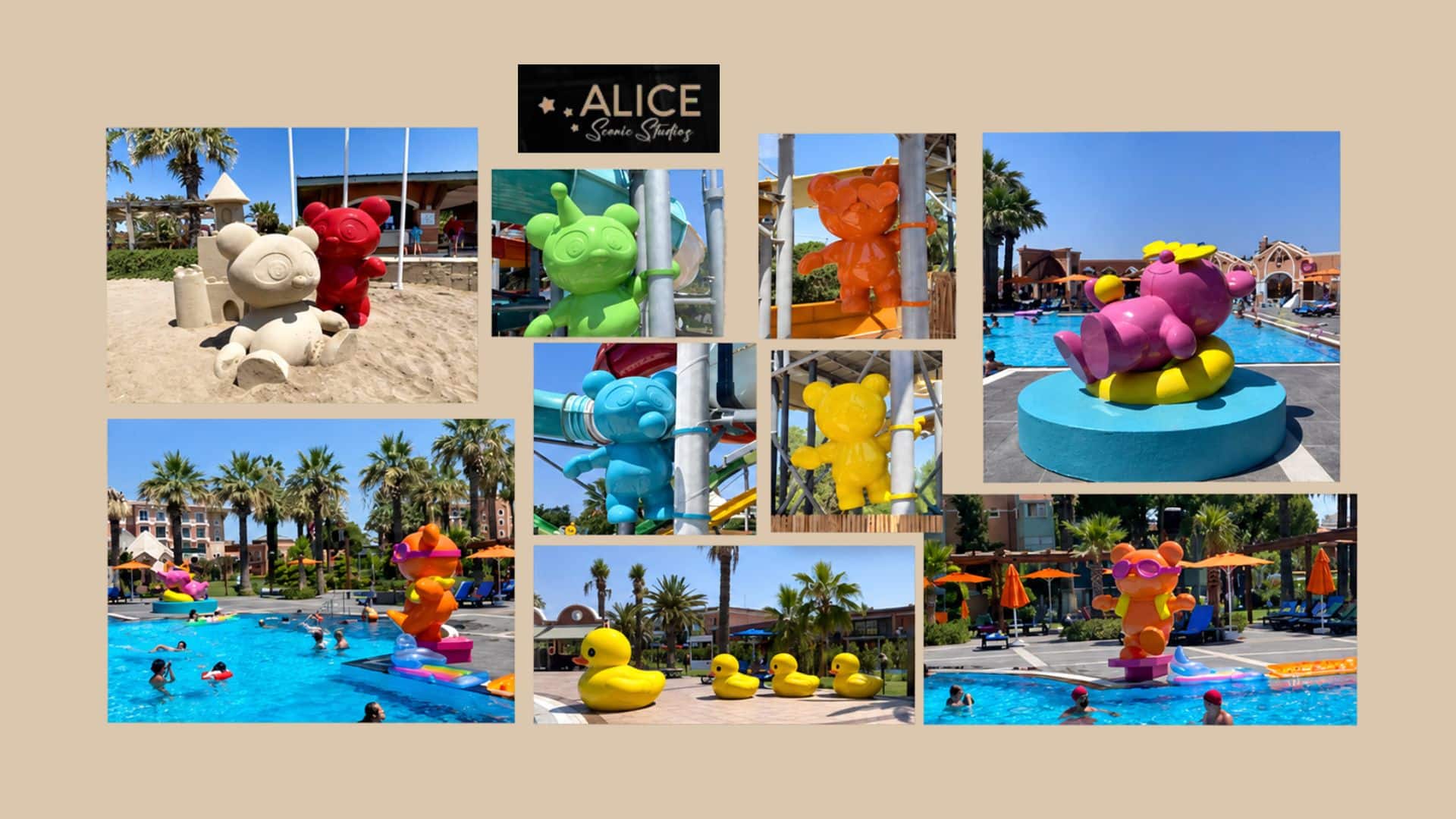
Designing Theme Park Environments for Florida’s Heat, Humidity, and Heavy Visitor Traffic
Florida gives theme parks strong sun, sudden storms, and sticky air almost all year. It also brings crowds that rarely stop. A themed build that looks great on opening day can fade fast if it was not made for this place. That is why theme park scenic fabrication in Orlando needs a different plan than a build in a mild climate.
This blog shows how UV exposure, moisture, corrosion, thermal movement, and heavy foot traffic shape smart design.
What Florida Does to a Theme Park Build
Every outdoor structure faces five tests, day after day.
Strong Sun and UV Exposure
- Hours of direct sun and intense UV can fade color and break down unprotected surfaces
- Pieces that look rich in the morning can look chalky and tired by the next season if the materials and coatings are wrong
Heat and Thermal Movement
- Heat puts stress on joints, seams, and coatings
- Daily swings from hot sun to cool rain make materials expand and contract, which can open seams and crack finishes if the build does not allow for that movement
Wet Air and Sudden Rain
- Humid air keeps surfaces damp for long stretches
- Materials that soak up water can swell, rot, or grow mildew
- Rain can start without warning, so every outdoor piece must always be ready for it
Corrosion
- Moisture-heavy air and salt in the air near the coast attack unprotected metal
- Hidden frames, fasteners, and joints need protection too, since rust often starts where no one can see it
Nonstop Foot Traffic
- Thousands of guests touch, lean on, and climb on scenery every day
- Queue lines put guests right next to themed walls and props
- Surfaces must look good up close, not just from far away
Design and Materials Built for the Climate
Start with the weather, not the look. Good teams plan for it on paper before any building begins:
- Study how sun, rain, and moisture reach each area of the site
- Pick the material and finish for every surface early, and balance looks, strength, and budget
- Allow for thermal movement in joints, seams, and large surfaces
- Build a prototype to test form, detail, and scale before full production (for selected projects)
- Plan lighting, sound, and AV inside the structure from the ground up, so nothing sits exposed
- Think about how each piece will be cleaned, touched up, and repaired over time
Strong weather-resistant theme park fabrication is planned this way, long before the first mold is made.
What Materials Withstand Florida Heat and Humidity in Theme Parks?
- Fiberglass (FRP): light, strong, and a good fit for sculptures, facades, rocks, trees, and characters. It does not rot or rust the way many traditional materials can.
- Polycoating and gel coat: protective layers that seal the surface against moisture and help guard against UV damage
- Hand-painted scenic finishes and weathered patinas: surfaces that look rich and hold up outdoors
- Polyurethane and polyester casting: rigid and flexible parts with strong surface detail
- Metalwork: frames that add strength and clean detail, finished with protective coatings to resist corrosion
How Can Scenic Fabrication Handle Heavy Theme Park Visitor Traffic?
Guests do not treat scenery gently. Smart theme park scenic fabrication in Orlando plans for that wear from day one:
- Character figures with strong internal armatures
- Themed attraction components and scenic elements fabricated based on approved project drawings and specifications
- Queue areas, ride theming, and character zones made to handle thousands of daily visitors
- Layered finishes that stay sharp under close eyes
- Molds made for repeat use without losing surface quality, so matching pieces stay matched
- Carpentry, metalwork, FRP, and paint built as one workflow, so parts fit together cleanly
Fiberglass and protective finishes help scenic elements withstand challenging outdoor conditions. Read More about designing durable fiberglass attractions for long-term outdoor use.
Planning for Long-Term Maintenance
Florida’s climate means even the best scenery needs care. Parks that plan for upkeep early spend less and keep their look longer:
- Choose finishes that can be cleaned and touched up without redoing a whole surface
- Keep access in mind, so teams can inspect and service hidden areas, lighting, and AV
- Use repeatable molds and documented finishes, so a damaged piece can be replaced or repaired to match
- Schedule regular checks for fading, cracked seams, and early signs of corrosion, so small fixes do not become big ones
From Idea to Opening Day in Five Steps
- Concept and master plan: map the guest path from entry to exit, with 3D visuals everyone can review
- Material and finish choice: match each surface to its job, its exposure to Florida weather, and its budget
- Prototype and mold: approve form, detail, and scale before production (for complex projects)
- Build and finish: carpentry, metalwork, FRP, paint, and AV come together in one coordinated flow
- Ship, assemble, and hand over: large pieces break into sections, pack well, rebuild on site, and get tested before handover
Coordinating design, production, quality checks, and installation helps keep complex projects on track. Explore More about managing fabrication quality, timelines, and project requirements.
Questions to Ask Before You Hire a Fabricator
A partner for theme park scenic fabrication in Orlando should answer these with ease:
- How do you test form and finish before full production?
- Which material will each surface use, and why?
- How will the pieces hold up to UV, moisture, corrosion, and thermal movement?
- How will the pieces hold up to crowds?
- What does long-term maintenance look like for each finish?
- How are large pieces packed and rebuilt on site?
- Are lighting and AV planned inside the structure?
- Who manages the project, and who handles installation?
How Alice Scenic Studios Supports Your Park Project
Alice Scenic Studios is a U.S.-based scenic fabrication company serving projects across the globe. Here is what that support looks like at each stage of theme park scenic fabrication in Orlando:
Before the Build
- Technical production drawings that document every structure
- Prototypes that let you approve form and detail early (for selected projects)
During the Build
- Full fiberglass fabrication services, from mold design and casting to polycoating and paint
- Themed attraction components and scenic elements fabricated based on approved project drawings and specifications
- Carpentry, metalwork, scenic paint, and AV integration under one roof
- Weather-resistant theme park fabrication produced in a 16,000 sq ft molding and FRP workshop and a 10,000 sq ft carpentry facility
After the Build
- Large pieces that break into sections for easy shipping
- On-site assembly and installation across the U.S.
- Coordination with your construction and operations teams, plus full testing before handover.
Conclusion
Florida will test every structure in a theme park, from the first sunrise to the last crowded evening. Parks that plan early for UV, moisture, corrosion, thermal movement, and heavy traffic, and for how they will maintain each piece over the years, get scenery that stays vivid, durable, and ready for guests. The right materials, a tested prototype, and one coordinated team make that possible.
Ready to build a park that lasts? Partner with Alice Scenic Studios for theme park scenic fabrication in Orlando made for Florida’s weather and your guests’ energy. Reach out today and let’s start planning.
FAQs
- What Makes Theme Park Scenic Fabrication Durable in Orlando?
Durability comes from the right materials and careful finishing. Fiberglass, protective coatings, corrosion-resistant metalwork, strong armatures, and layered paint work together, so durable outdoor scenic structures can handle UV, rain, humidity, and crowds. - Can large pieces be shipped and installed?
Yes. Large elements are made to break into sections, pack well, and rebuild cleanly on site. Installation teams handle on-site assembly across the U.S. - Can the team build themed components for rides and attractions?
Yes. The team fabricates themed attraction components and scenic elements based on approved project drawings and specifications. Safety-critical ride systems and their engineering remain with the ride manufacturer and project engineers. - Does the team handle lighting and interactive features?
Yes. Lighting, projection surfaces, sound, and interactive features are built into the structure from the start. - Does Alice Scenic Studios handle the whole project?
The team can act as a direct turnkey provider, covering design, fabrication, and installation. It can also work as a subcontractor to general contractors and design firms.