

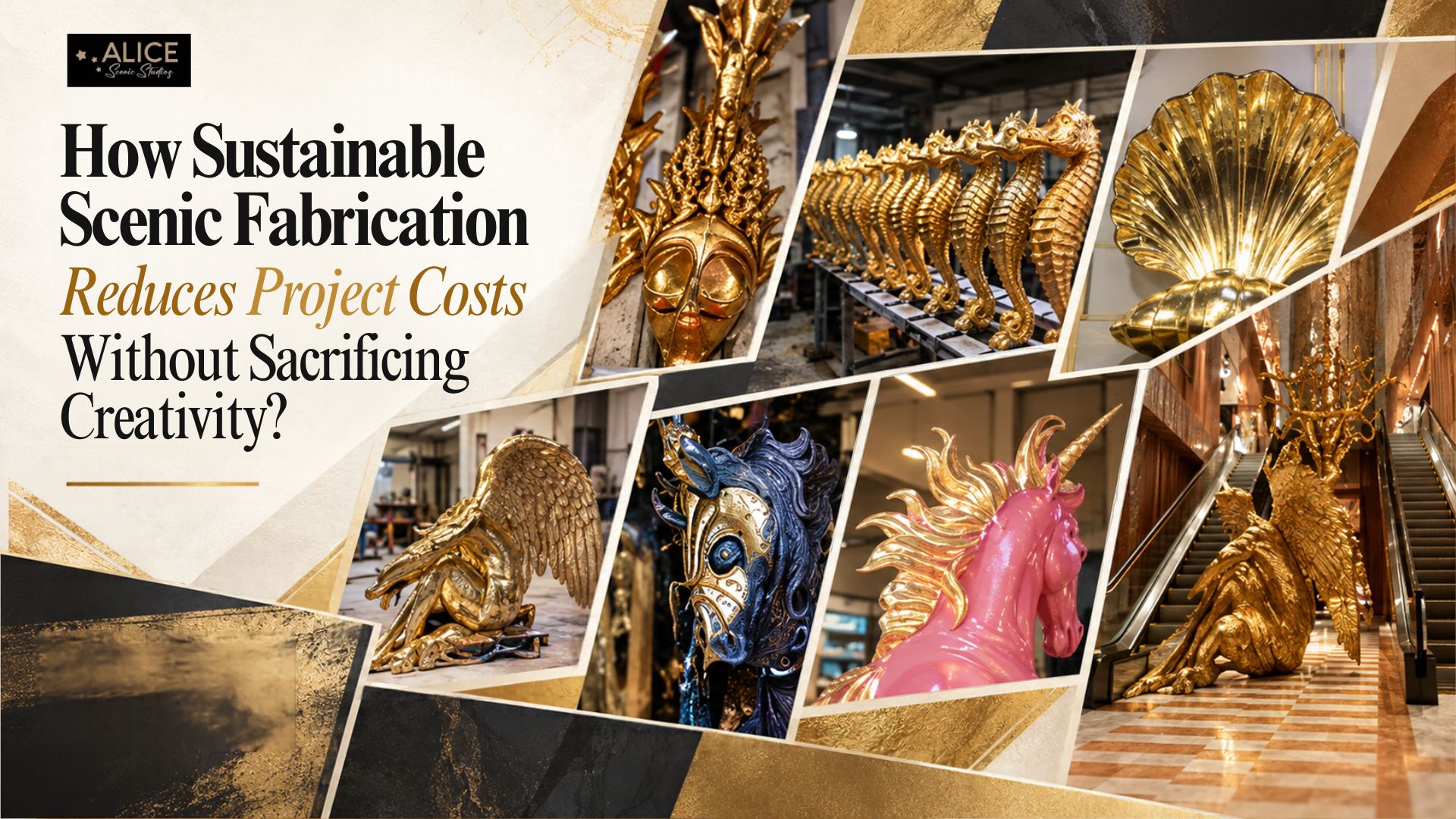
How Sustainable Fabrication Practices Can Reduce Costs Without Sacrificing Creativity?
Many people think saving money means cutting creative ideas. In scenic work, that does not have to be true. A thoughtful build plan can control costs and keep the design bold. That is the idea behind sustainable scenic fabrication: using materials and production methods that reduce waste and rework, and being clear about what each choice does and does not achieve.
In this blog, you will learn how planning affects cost, how it differs from material efficiency, waste reduction, and environmental impact, which materials we work with, and where these methods apply.
What Does Sustainable Scenic Fabrication Mean in Scenic Work?
Sustainability is more than a lower price or a longer-lasting piece. Four related goals are often blended together, and they are worth separating:
- Cost efficiency: Spending less to reach the same result, through fewer mistakes, less rework, and sensible scheduling.
- Material efficiency: Using the right amount of the right material, for example by planning cuts carefully and choosing materials suited to the piece.
- Waste reduction: Producing less scrap and fewer discarded pieces, for example by reusing molds, designing for repair, and avoiding rebuilds.
- Environmental benefit: A real reduction in environmental impact, such as lower material consumption or less replacement over a piece’s life. This depends on the materials used, how far they travel, and how long the piece stays in service.
How Can Sustainable Scenic Fabrication Reduce Project Costs?
Many budget problems come from mistakes, delays, and rework. Depending on the project, these practices can help limit them:
- Early design development: For many projects, we develop 3D models and AutoCAD production drawings so dimensions are agreed before cutting or assembly begins. The level of design documentation depends on the scope.
- Physical prototypes: On some projects, we build a prototype early so you can review form, surface detail, and scale before full production. This can reduce mid-production revisions.
- Reusable molds: Where volume is needed, molds can be engineered for repeated use. This supports consistent surface quality and reduces the need to remake tooling.
- Coordinated trades: Our facilities handle many trades, including carpentry, molding, FRP, casting, finishing, and paint. Exact capabilities vary by project, and some elements may involve specialist partners.
- Planned shipping: Large elements can be designed in sections that pack efficiently and reassemble on site.
- A cost-aware production model: Our U.S.-managed, Turkey-produced approach can keep pricing competitive, even after shipping is factored in. Actual savings depend on the project’s size, materials, and schedule.
Effective production planning also helps prevent costly delays and unnecessary revisions. Learn more about managing scenic fabrication quality and project timelines to understand how fabrication teams coordinate complex projects while maintaining production standards.
What Materials Are Used in Scenic Fabrication?
We choose materials for durability, appearance, and budget, and we review these choices with the design team during material and finish specification. Common materials and methods include:
- Wood and composite materials: Shaped with CNC equipment, with carpentry handled at our 10,000 sq ft facility, from fine millwork to large scenic frameworks.
- Metal: Used for structural strength and clean detail where the design needs it.
- FRP (fiberglass-reinforced plastic): Lightweight and weather-resistant, often used for outdoor installations, large scenic pieces, and character sculptures.
- Polyurethane and polyester casting: For rigid and flexible parts with fine surface detail.
- EPS foam carving with FRP shell coating: Used for large-scale sculpture and character work.
- Polycoating, gel coat, and hand-painted finishes: Finishes designed for outdoor exposure, with realistic detail up close.
Durable materials can mean fewer rebuilds and fewer unplanned costs over time. That is a cost and waste advantage, though it should not be confused with a guaranteed environmental benefit. Weather, maintenance, and site conditions all affect how long any piece lasts.
For a closer look at material durability in outdoor settings, read our guide to fiberglass fabrication for durable outdoor attractions.
Can Sustainable Practices Make Your Design Better?
They can. A solid plan gives your creative team more room, not less. When technical details are settled early, everyone can focus on the story. Depending on the project, this may include:
- Concept and technical development: Where the project calls for it, we can provide concept illustrations, 3D planning, and technical drawings so the vision is resolved before fabrication.
- Early review: Renderings and, on some projects, physical prototypes let you review the look before committing.
- Connected digital tools: CNC milling and 3D printing help carry a digital file through to a physical object with greater precision.
- Layered finishes: Our paint team can add hand-applied textures, aged patinas, and graphic treatments.
- Technology planning: Where a project includes lighting, sound, or interactive elements, structures can be planned to accommodate them.
Good sustainable scenic design begins with a story people can feel, then selects materials and methods to support it. Planning ahead also matters for logistics: large pieces can be designed to break down for shipping and go back together on site.
Where Does This Approach Work Best?
Our methods can be applied across several types of projects, with scope varying by client:
- Themed environments and theme parks: Our custom themed environment fabrication can include structural carpentry, FRP sculpting, scenic paint, and facades. Concept design, AV integration, and installation support are available on selected projects, depending on scope. Explore our custom themed environment fabrication services to see how scenic construction and detailed fabrication can support immersive, story-driven environments.
- Fiberglass fabrication: Character sculptures, facades, ride elements, and weather-resistant urban furniture designed for outdoor use.
- Museum exhibits: Fabrication for exhibits, with interactive and technology elements such as AR, VR, or projection mapping on selected projects.
- Broadcast and studio sets: Modular set pieces and technology-ready fabrication for news, sports, eSports, and corporate broadcasting.
- Retail and hospitality: Retail displays, branded hotel lobbies, and themed restaurants.
- Holiday and seasonal decor and lighting: Durable fabrication for seasonal installations, including outdoor use.
We also support installation and handover, coordinating with your construction and operations teams. The scope of on-site installation, finishing, and system testing is defined project by project and agreed with you in advance.
Final Thoughts
Budget and bold design do not have to compete. Planning early, choosing materials carefully, and using proven production methods can help you manage both. Our U.S. management team works with yours to keep communication clear from first concept to handover.
If you want a build that holds up, respects your budget, and still wows visitors, our team can help. Choosing eco-friendly scenic fabrication starts with asking the right questions about materials, lifespan, and waste, and with working with the right partner. Our custom themed environment fabrication services bring design, production, and installation support together, depending on your project’s needs.
Learn more about our sustainable scenic fabrication services, or reach out to Alice Scenic Studios to talk through your next project.
Frequently Asked Questions
-
What are the benefits of eco-friendly scenic fabrication?
- The benefits depend on the project. Common ones include lower costs from fewer mistakes and less rework, more efficient use of materials, and less waste when molds are reused and pieces are built to last. Any environmental benefit depends on the materials chosen and how long the piece stays in use, so we discuss these trade-offs with you.
-
Does sustainable fabrication limit what we can build?
No. We build themed environments, museum exhibits, studio sets, retail displays, and large sculptures. The approach changes how we plan and build, not how bold the idea can be.
-
Do you build prototypes before full production?
On some projects, yes. Where it fits the scope, we build a physical prototype early so you can review form, surface detail, and scale before full production.
-
Where is the work produced and managed?
Project management is handled from the U.S. Production takes place in facilities in Turkey, including a 16,000 sq ft molding and FRP facility.
-
Is sustainable fabrication suitable for outdoor projects?
It can be. FRP is lightweight and weather-resistant, and polycoating, gel coat, and weathered patina finishes are designed for outdoor exposure. Performance depends on the design, materials, climate, and ongoing maintenance, so we recommend discussing the site conditions with us early.