

How Modern TV Studios Combine Technical Requirements With Creative Set Design
Viewers never see the cable trays, load ratings, or power drops. They see a sharp desk and a glowing wall. Modern TV studios earn that clean look by solving creative and technical problems together, not one after the other. Behind every polished frame sits a long list of rules.
In this blog, we break down how lighting, LED walls, structure, and sound shape set design. You will also see a step-by-step build path, format-specific tips, and answers to common questions.
Where Technical Needs Meet Creative Ideas
Every great set balances two lists. One list holds creative goals. The other holds technical limits. In modern TV studios, both lists are written on day one.
Lighting That Shapes the Set
Lights and surfaces work as a team. Glossy finishes can bounce glare into the lens. Matte paint can look flat under the wrong angle. Robotic cameras and fixed shots make this planning even more important. So we plan light positions as the set takes shape.
- Key, fill, and back light need clear paths with no blocked angles.
- Desks and walls can hold built-in LED lighting.
- Test color and texture under studio lights before final paint.
- Leave space behind the desk for backlight and depth.
LED Walls and Screens
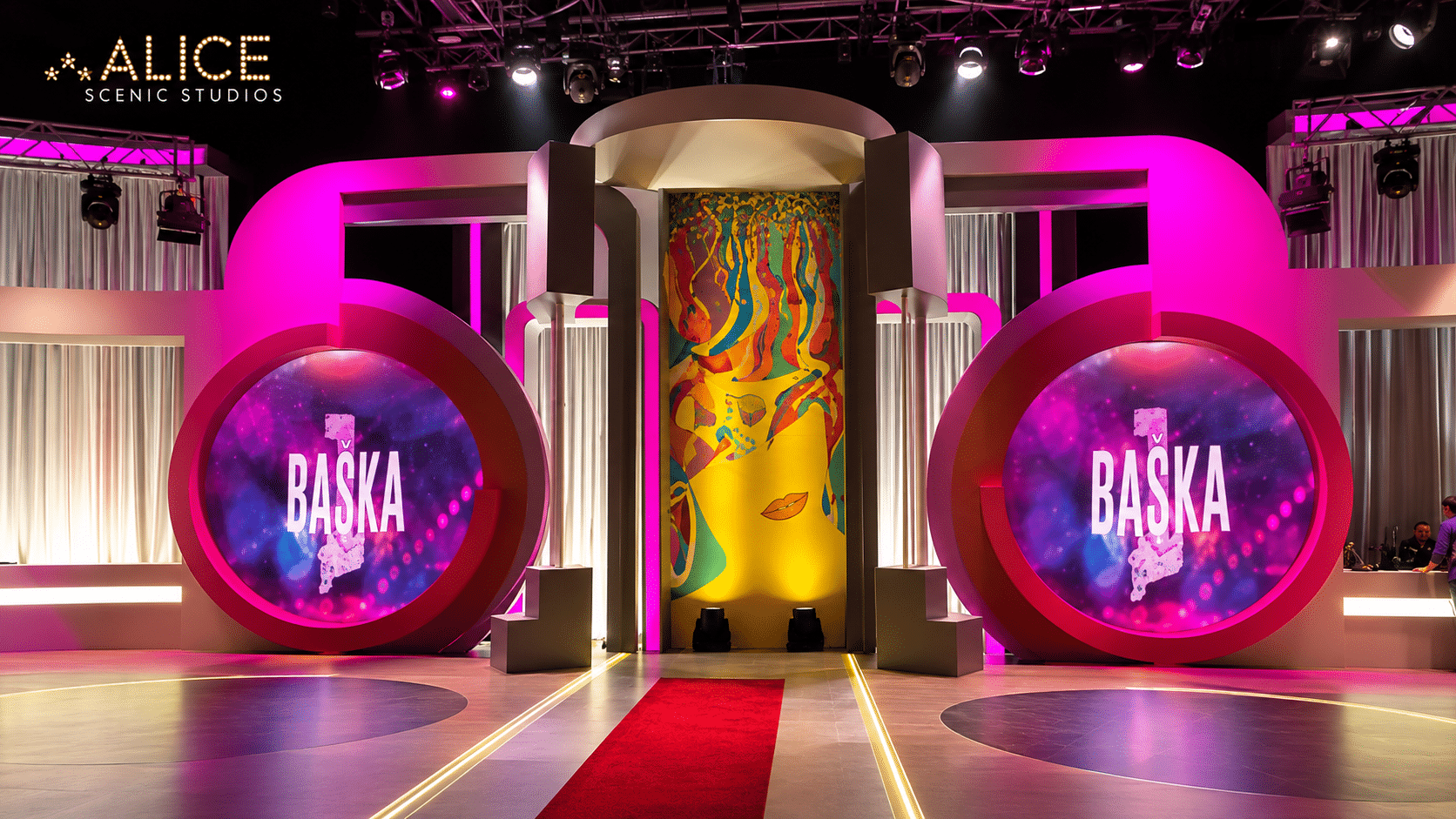
LED walls now anchor many news and sports sets. They need more than a nice picture. Brightness, color accuracy, and processing must match the studio lights. Frames must also carry the weight and hide the cables. Calibration matters, because a wall that looks perfect in person can look off on camera.
- Place walls where cameras can use them best.
- Plan power and signal routes before the frame is built.
- Choose pixel size based on how close cameras will sit.
- Leave service access for repairs.
Structure, Rigging, and Load
A set is heavy, and so is everything hung above it. Lighting, screens, and scenic pieces add up fast. Strong metal frames and rigging supports keep everything safe. Share fixture and screen weights with your builder early. Local building codes also play a role, so confirm requirements before design is final. Document every mount point for crews.
Sound and Cable Paths
Hard, shiny surfaces reflect sound. Open sets can echo. Plan where soft materials or panels can sit without hurting the look. Hide cable paths inside desks and walls so crews can reconfigure fast. Test the room with a few spoken lines before sign-off.
Creative Choices That Need a Technical Check
Great ideas still need testing. Before you approve a look, run it through this list.
- Color: Deep reds and bright whites can shift on camera. Test samples under studio lights.
- Texture: Fine patterns can shimmer on screen. Check them on a monitor.
- Shine: Glossy desks look rich, but they can reflect lights and crew. Use satin where needed.
- Branding: Logos and dimensional lettering should read clearly on wide and tight shots.
- Shape: Curves and angles look great, but they change camera blocking. Review them in 3D first.
From Brief to First Broadcast
Here is the path a strong build follows.
- Brief: Share your format, camera angles, lighting needs, and brand identity.
- Design: Review 3D models and technical drawings. Every dimension should be mapped before production starts.
- Build: Carpentry, metalwork, paint, and graphics come together in the shop. Good television studio fabrication keeps these skills under one roof.
- Install: Your technical crew and the builders test lighting, LED, and audio on site.
- Support: Plan for format changes and strike services when production wraps.
Choose a set fabricator who joins at step one. Late changes cost the most. Early planning keeps surprises off the build floor.
From initial concepts to final installation, every stage plays a role in creating a functional broadcast environment. Learn more about the complete process of designing and building a television studio set.
How Different Formats Change the Brief
Every format asks for something different. That variety is why modern TV studios rarely look alike.
News Studios
News sets need a permanent anchor desk, clear sightlines, and room for big screens. Consistency matters, since viewers see the same set daily. Subtle LED accents can refresh the look without a rebuild.
Talk and Contest Shows
These sets need warmth, depth, and fast changes. Seating zones, stage pieces, and branded backdrops often move between segments. Plan quiet zones, since guests and hosts need clear audio.
Sports and eSports
Flexible multi-camera layouts and bold visuals lead here. Fast assembly and complex LED and lighting systems are part of the plan from the first drawing. Think about camera paths so crews can move freely during live play.
Design Choices That Keep a Studio Flexible
One room often serves many shows. These choices help modern TV studios change fast.
- Modular desks and panels that rearrange between formats.
- Lighting positions and AV routes set in the drawings from the start.
- Strong frames that can take repeated setup and strike.
- Finishes tough enough for daily use, yet easy to touch up.
- Clear drawings so future crews know how each piece fits.
- Storage plans for pieces that are not in use.
Flexibility is not an add-on. It is part of the first drawing.
Questions to Ask Before You Build
Bring these questions to your first meeting.
- Which camera angles matter most, and what must stay clear in each shot?
- How much weight will hang above the set?
- Where will lighting, screens, and cables live?
- Which pieces must move, and how often?
- Who will maintain the set after launch?
Conclusion
Modern TV studios thrive when design and engineering share one plan. Start with the camera, light the set with purpose, and build every piece to move and last. Small technical choices, such as where a cable runs, often decide whether a set feels effortless.
At Alice Scenic Studios, we work as a set fabricator for news, talk, sports, and eSports productions. Our team handles design, carpentry, metalwork, scenic paint, lighting integration, and on-site installation. If you are planning a new studio, we are ready to help.
Frequently Asked Questions
1. What technical requirements are important in modern TV studio fabrication?
Key needs include lighting positions, LED wall placement, rigging and load capacity, power, cable routes, and sound control. Strong television studio fabrication plans include all of these in the drawings, so the build floor has no surprises. Early drawings also help your team catch conflicts before any material is cut.
2. How do fabricators combine lighting and set design in television studios?
They plan light positions and set surfaces together. Finishes are tested under studio lights, and LED lighting is built into desks and walls. This keeps glare down and the picture clean. Teams also leave clear paths for key, fill, and back light.
3. What makes a television studio set suitable for modern broadcasting?
A suitable set reads well on camera, holds technology, and changes fast. It has strong frames, flexible modules, and finishes that look rich on a 4K screen. It also leaves room for lighting, LED walls, and clean cable routes.
4. How does broadcast scenic fabrication support television production?
Broadcast scenic fabrication turns designs into physical sets, from structural framing to fine surface details. It pairs carpentry, metalwork, paint, and graphics with lighting and AV integration, so the set works on camera and on the floor. It also covers installation and strike when production ends.
5. Can one TV studio serve several shows?
Yes. Modular pieces, planned lighting positions, and reusable frames let modern TV studios switch between formats. Early planning keeps changes quick and costs lower. For example, a morning news desk can give way to a talk show couch with a few quick moves.