

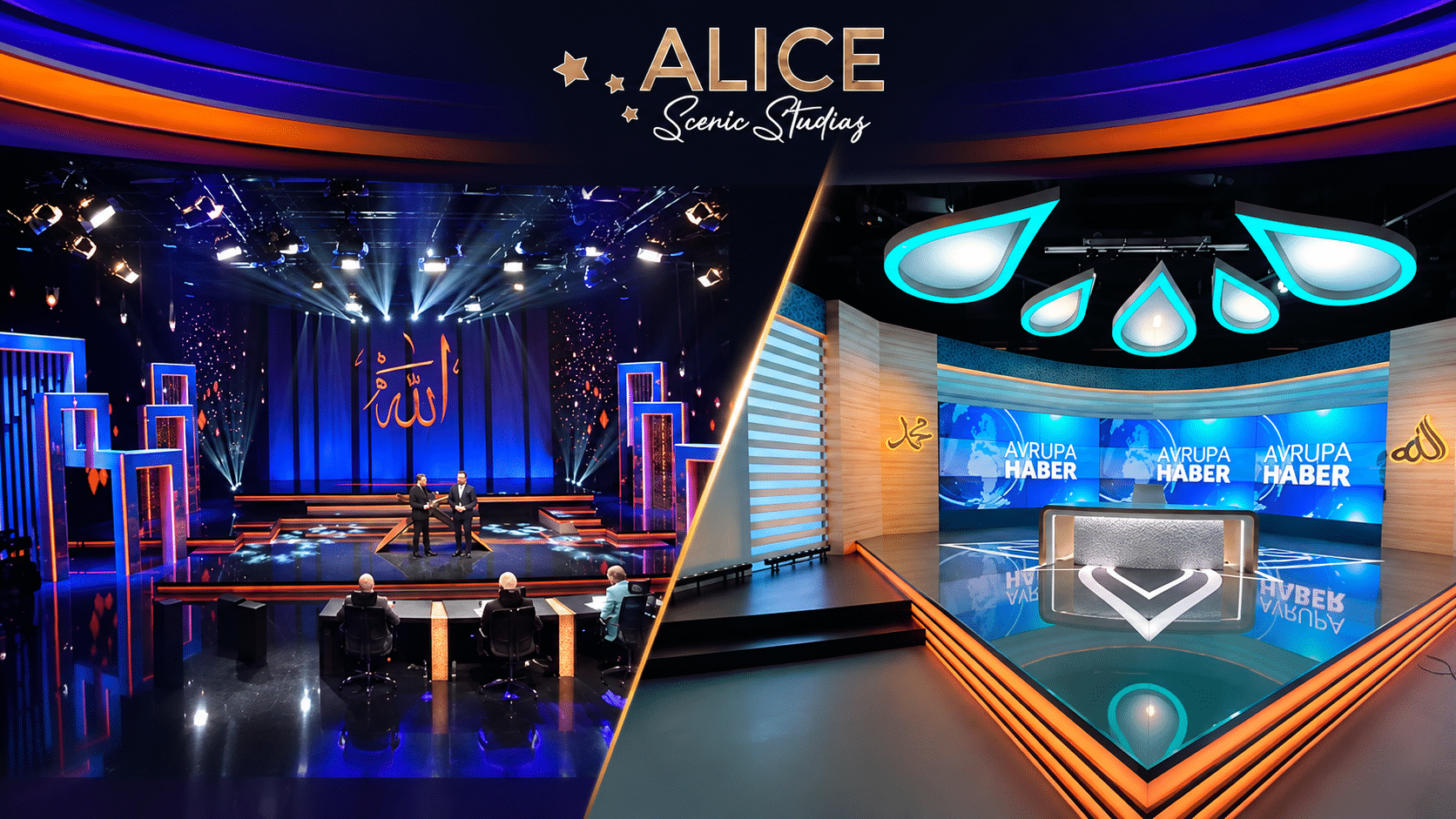
How Background Designs Influence the Look of Television Programs
Mute any television show, and you can still guess what kind of show it is. The set does that work before anyone speaks. Strong background designs for TV set projects shape the mood, the trust, and the brand identity viewers feel on screen. A news desk feels calm and serious. A game show feels loud and bright. This post explains how backgrounds shape a program and what goes into a set that looks right on camera.
What Viewers Read Before the First Word
Viewers take in a set in a glance. Alice Scenic Studios says a good set should tell audiences who you are before anyone speaks. A background sends several signals at once:
- Genre: news, talk, sports, contest or lifestyle.
- Tone: serious, playful, warm or high energy.
- Trust: a clean, steady set feels dependable.
- Brand: colors, logos and shapes that viewers learn to recognize.
5 Design Choices That Shape the Look
Good background designs for TV sets build balance five things. When one is off, the whole frame feels off.
- Color: Warm tones can feel friendly. Cool tones can feel calm and sharp. Match the palette to the show and to your brand.
- Texture: Surface finishes add depth. Layered scenic paint gives a set texture and a polished on-screen presence.
- Depth: Layers in front of and behind the talent keep the frame from looking flat. Shelves, panels and screens can help.
- Lighting: Broadcast lighting and LED elements shape how every surface reads on camera. Plan them with the set, not after.
- Graphics: Logos, dimensional lettering and backlit panels carry your brand into every shot.
Treat these five as a package. Change one, and you may need to adjust the others.
How Backgrounds Carry Your Brand
A set is one of the few things viewers see in every episode. That makes background designs for TV set projects a strong place to build brand identity.
- Repeat the same colors across the set, the graphics, and the on-screen look.
- Echo your logo shapes in panels, desks, and lighting.
- Place channel branding where the camera can see it.
- Keep the style steady, so viewers know the show at a glance.
Backgrounds by Show Format
Each format asks for something different, so background designs for TV set projects vary widely. Alice Scenic Studios builds for news, sports, eSports, live events, and corporate video. Its portfolio also includes talk, contest, cooking, and awards stages.
- News: a clean desk, clear branding and a calm backdrop that keeps eyes on the anchor.
- Talk shows: a warm, layered space that feels like a living room or a stage.
- Contest and game shows: bold color, strong shapes and lighting that carries energy.
- Sports and eSports: high-impact visuals with the technical support for LED, lighting and broadcast systems.
- Corporate video: a polished backdrop that reflects the company brand without distracting.
Whatever the format, the goal is the same: a set that supports the show and the people on screen.Different television formats require different layouts, production elements, and flexible set configurations.
Discover How Flexible Studio Sets Support Different Show Formats to understand how fabrication creates adaptable television environments.
Lighting, LED Walls and Screens
Lighting and screens change how a background looks on camera. Alice Scenic Studios builds LED and broadcast lighting integration into its studio sets.
- Decide where broadcast lights will hang before the set is built.
- Leave space for LED walls and the cables behind them.
- Check how finishes react to light, since glossy and matte surfaces read differently.
- Test the look through the camera, not only by eye.
How a Background Gets From Idea to Camera
Strong television studio set design starts with questions, not sketches. The design team at Alice Scenic Studios works with producers, directors and technical leads to learn the show format, camera angles, lighting needs and brand identity. From there, the steps usually run like this:
- Concept: the show and brand identity become a set that reads strongly on camera.
- 3D models and drawings: some dimension and structural detail is mapped out before production.
- Lighting and AV planning: broadcast lighting positions, LED wall placements, and AV routes are built into the design from the start.
- Fabrication: carpentry, metalwork, paint and graphics are built to the plan.
- Installation: the team installs the set and coordinates with your technical crew.
- Strike and changes: format changes and strike services are available when production wraps.
Built for the Camera and the Floor
A set must look good on a 4K screen and survive daily production. That is where broadcast scenic fabrication comes in. The build covers:
- Carpentry and millwork: clean lines, tight joints, and smooth finishes that read well on camera.
- Metalwork: custom frames, desk structures and rigging supports built for load-bearing strength.
- Scenic paint: layered finishes that add texture and depth.
- Graphics and signage: channel branding, logos, dimensional lettering and backlit panels.
- Modular systems: sets that reconfigure between show formats, which can save time and cost.
Small Details the Camera Picks Up
High-resolution screens show everything. Sloppy details can pull attention away from the talent. Look closely at:
- Tight joints and clean edges
- Smooth, even finishes
- Sharp, well-aligned lettering
- Neat cable and rigging paths
Even minor fabrication imperfections can become noticeable under professional broadcast cameras. See Why Precision Matters in Television Set Design and how detailed craftsmanship improves the final on-screen appearance.
Even strong background designs for TV set plans can slip. Watch for these:
- Designing from a render without checking camera angles
- Adding lighting and LED walls after the build is done
- Using too many colors or patterns that compete with the talent
- Letting logos sit where the camera will not see them
- Forgetting that the set must hold up under daily shoots
- Skipping a plan for format changes
Catching these early saves rework later.
A Simple Planning Checklist
Before you brief a studio, gather these details:
- Show format and run length
- Camera count and angles
- Brand colors, logos and style guides
- Lighting and LED wall plans
- Studio floor size and power access
- Install dates and any format changes ahead
The Bottom Line
The look of a program starts behind the talent. Smart background designs for TV set projects combine color, texture, lighting and graphics into one clear idea. Alice Scenic Studios supports that process from television studio set design to broadcast scenic fabrication and on-site installation, for news, sports, eSports, live events and corporate video. Visit the Alice Scenic Studios website to see its TV set work and talk about your next studio.
Frequently Asked Questions
1. How does background design influence television programs?
It sets the mood, signals the genre, and builds trust before anyone speaks. Color, texture, depth, lighting, and graphics all shape how viewers read the show.
2. What makes a television studio background visually appealing?
A clear idea, balanced color, layered depth, and good lighting. Clean finishes also matter, since sets are seen on high-resolution screens. Everything should support the talent and the show.
3. How do television set backgrounds support a show’s brand identity?
They carry the show’s colors, logos, and shapes into every shot. Dimensional lettering, channel branding, and backlit panels keep the brand visible, while the overall style matches the show’s tone.
4. What should be considered when designing backgrounds for television studios?
Consider the show format, camera angles, lighting, brand identity, and how the crew will work on the floor. Also plan for LED walls, AV routes, and any future format changes early in the design.
5. Can a TV set background change between show formats?
Yes, if it is planned that way. Modular and reconfigurable set systems are designed to change quickly between formats, which can save time and cost across productions.