

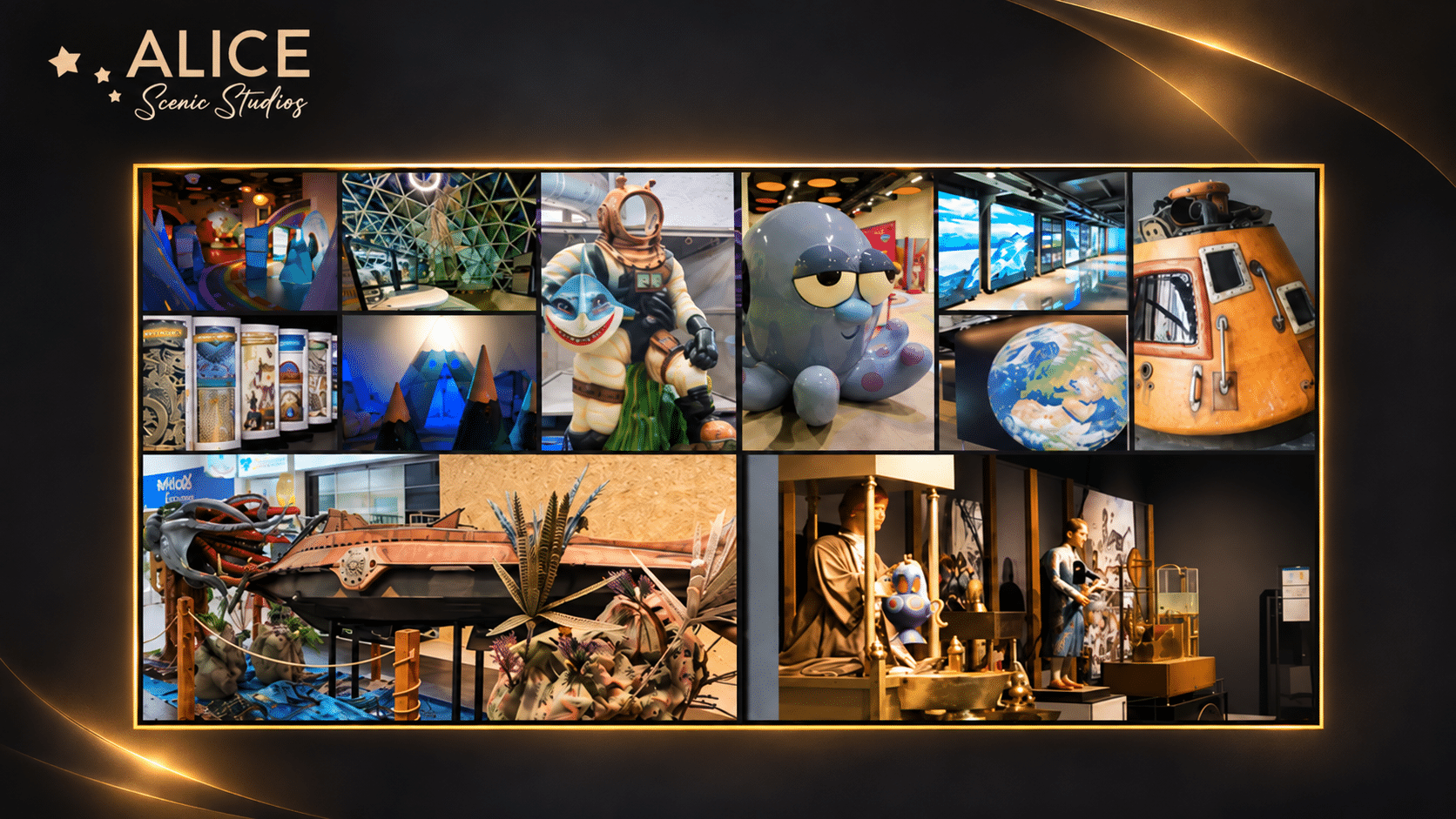
From Waste to Wonder: Smart Material Choices for Eco-Friendly Scenic Builds
Every set, exhibit, and themed space starts as a pile of raw materials. What happens to those materials after the final day matters as much as how they look on opening day. That is why sustainable scenic fabrication matters to producers, museums, retailers, and theme park teams who want to build with more care. Smart material choices, careful planning, and durable construction can reduce waste and help a build serve more than one season, show, or event.
Here is how better material decisions can turn waste into wonder.
Why Waste Builds Up in Scenic Projects
Scenic builds are often made for a short window of time. Without a plan for reuse, a lot of good material ends up as scrap.
- Pieces built for one event are often thrown away when it ends.
- Late design changes create offcuts and require rework.
- Fragile finishes wear out early and need replacing.
- Over-ordering adds to leftover stock.
- Structures that cannot be taken apart are harder to reuse or recycle.
Most of this waste can be reduced before the first cut is made.
Start With the Plan, Not the Material
A material is only a good choice if it suits the job. This is where sustainable scenic design begins, because the right plan decides how much material is needed and how long it will last.
- 3D modeling and AutoCAD production drawings lock in dimensions before anything is cut or assembled.
- Early physical prototypes for selected projects let you see and feel the design before full production starts.
- Modular pieces can be rearranged or reused for different layouts and formats.
- Matching each material to its use, such as indoor or outdoor and short run or multi-season, avoids over-building and under-building.
Smart Material Choices That Support a Longer Life
In sustainable scenic fabrication, the goal is to choose materials that fit the purpose and hold up over time. Replacing a worn piece costs more than building it well the first time.
Here are some common options and what they offer.
- Wood and composite materials: Multi-axis CNC machines (5X, 3X, and 2X) shape these materials with accuracy, which supports precise cutting and can help limit offcuts.
- Metal frames and supports: In-house metalworking adds strength and clean detail, so structures can handle repeated use.
- FRP (fiberglass reinforced plastic): These structures are lightweight and weather-resistant, which suits outdoor installations and large scenic pieces.
- Polyurethane and polyester casting: Rigid and flexible components with strong surface detail work well for props, replicas, and themed architectural elements.
- Scenic paint and finishes: Layered finishes with texture and depth can look rich while holding up to daily production schedules.
- Reclaimed or recycled content: Where a project allows, these materials can be considered, as long as they meet the structural and safety needs of the build.
For outdoor scenic projects, material selection and protective finishes play an important role in long-term performance. Read more about fiberglass fabrication for outdoor attractions.
Making Fewer Pieces Go Further
Smart production methods are just as important as the materials themselves. Planning for reuse from the start can stretch the value of every build.
- Precise molds allow consistent replication across large runs without losing detail, so one mold can serve many pieces.
- CNC milling and 3D printing connect a digital file to a finished object, which can cut down on guesswork and rework.
- Modular broadcast and exhibit pieces can be reconfigured for new formats.
- Seasonal and themed sculptures can be designed with durable materials for use season after season.
- Clear technical drawings help keep ordering accurate, so less material is left over.
Fiberglass can serve many purposes across custom scenic projects, from decorative sculptures to architectural components. Discover the common applications of fiberglass fabrication.
Where Eco-Friendly Choices Show Up
Eco-friendly scenic fabrication is not limited to one type of project. The same thinking applies across the spaces Alice Scenic Studios builds.
- Museums and exhibitions: Durable builds are made to handle visitors day after day.
- Broadcast and studio sets: Modular pieces and technology-ready fabrication help one set serve more than one show.
- Theme parks, hotels, and retail: Themed zones and branded displays are built to define the space and last through regular use.
- Holiday and seasonal décor: Sculptures and lighting pieces can be built to come back year after year.
Durable materials and reusable scenic elements can also support immersive spaces designed for long-term use. Explore our themed environment fabrication services for custom attractions and themed spaces.
How Alice Scenic Studios Approaches It
Alice Scenic Studios is a U.S.-based scenic fabrication company that follows a “U.S.-managed, Turkey-produced” model. Its 10,000 sq ft carpentry facility and 16,000 sq ft molding facility work alongside metalwork, paint, graphics, and AV integration.
This is where the studio applies its sustainable scenic fabrication approach, using durable materials and smart production methods built to last. Keeping design, engineering, and fabrication closely connected makes it easier to plan materials together and avoid avoidable waste.
Final Thoughts
Great scenic work does not have to leave a large pile behind it. Early planning, the right materials, durable construction, and reusable parts all help a build do more with less. Sustainable scenic fabrication works best when these choices are made together, from the first drawing to the final install.
If you are planning a museum exhibit, a broadcast set, a themed space, or a retail environment, Alice Scenic Studios is ready to talk. The team can help you choose materials and methods that fit your goals and budget. Explore our scenic fabrication services or contact Alice Scenic Studios to plan your next build.
Frequently Asked Questions
1. What materials are used in sustainable scenic fabrication?
Sustainable scenic fabrication commonly uses wood, composite materials, metal, FRP, polyurethane, polyester, and scenic paints. The key is choosing materials that fit the purpose and last through repeated use. Depending on the project, reclaimed or recycled materials may also be considered, provided they meet structural and safety needs.
2. How can scenic fabrication companies reduce material waste?
Planning is the biggest factor. 3D modeling and AutoCAD drawings set exact dimensions before cutting begins, and early prototypes help catch design issues before full production. CNC machines support precise cuts, and molds allow repeat pieces to be made consistently. Modular designs also let parts be reused instead of rebuilt.
3. What are the benefits of using recycled materials in scenic builds?
Recycled materials can reduce the demand for new raw materials and keep usable items out of the waste stream. They may also support a client’s environmental goals and add character to a design. Availability and suitability vary by project, since each material must meet strength, safety, and fire requirements. Used with care, they can be part of eco-friendly scenic fabrication without affecting quality.
4. How can businesses make scenic fabrication projects more sustainable?
Businesses can start by sharing reuse goals with their fabrication partner early. Choosing modular layouts, durable finishes, and materials suited to the setting can help a build last longer. It also helps to plan for storage, repairs, and future reuse before the project begins. Working with a team experienced in sustainable scenic fabrication makes these decisions easier from the first drawing.
5. Can sustainable scenic design still look polished on camera and in person?
Yes. Sustainable scenic design is about making thoughtful choices, not giving up quality. Precision carpentry, scenic paint, and well-planned finishes can still deliver clean lines, rich texture, and a strong visual presence. The difference is that these choices are made with durability and reuse in mind.